
Law firm website design
Twelve practice areas, twelve attorney profiles and the disclaimers a legal site needs.
- 20 pages
- 44 images
$1,000$500
See detailsReady-made · live demo online
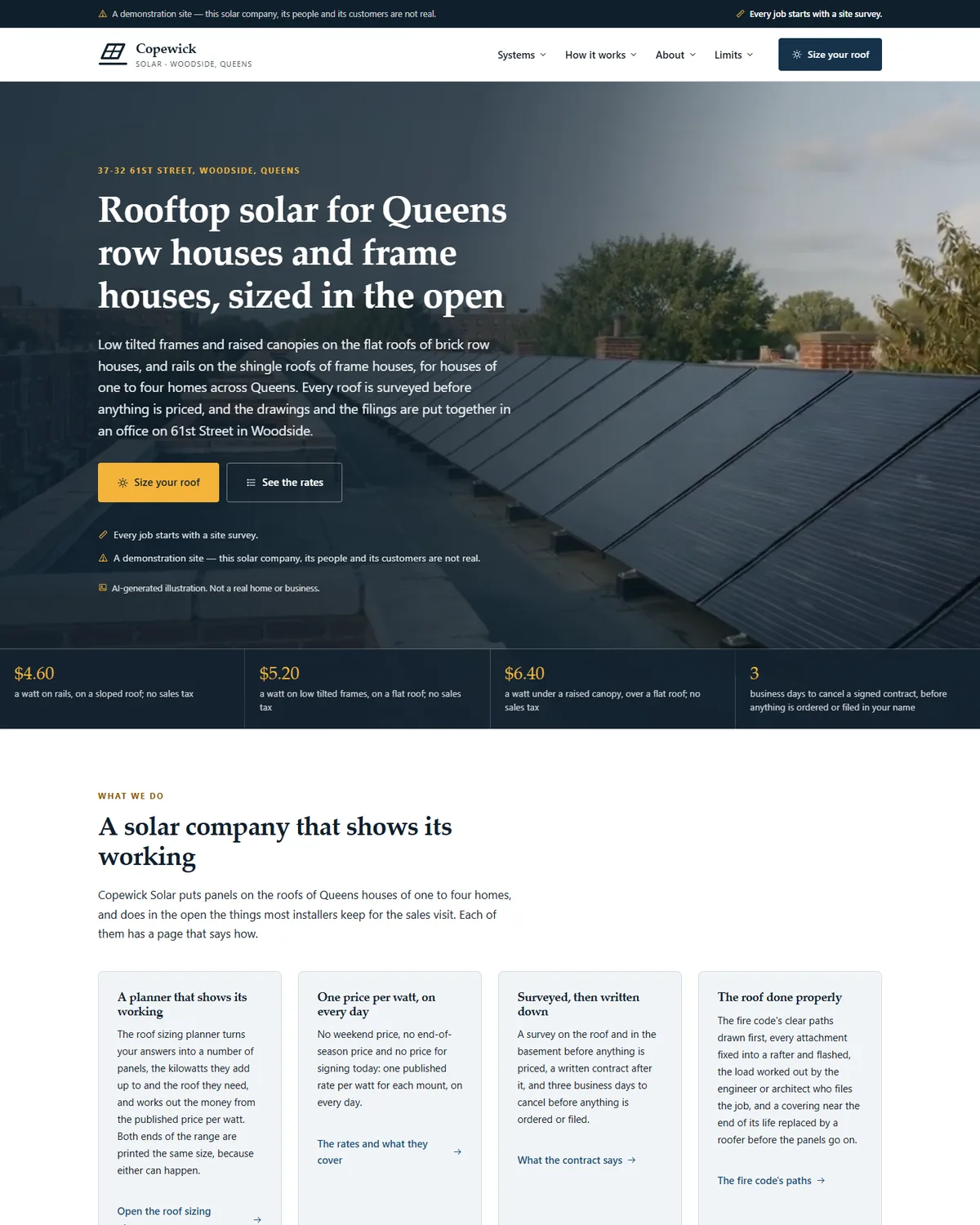
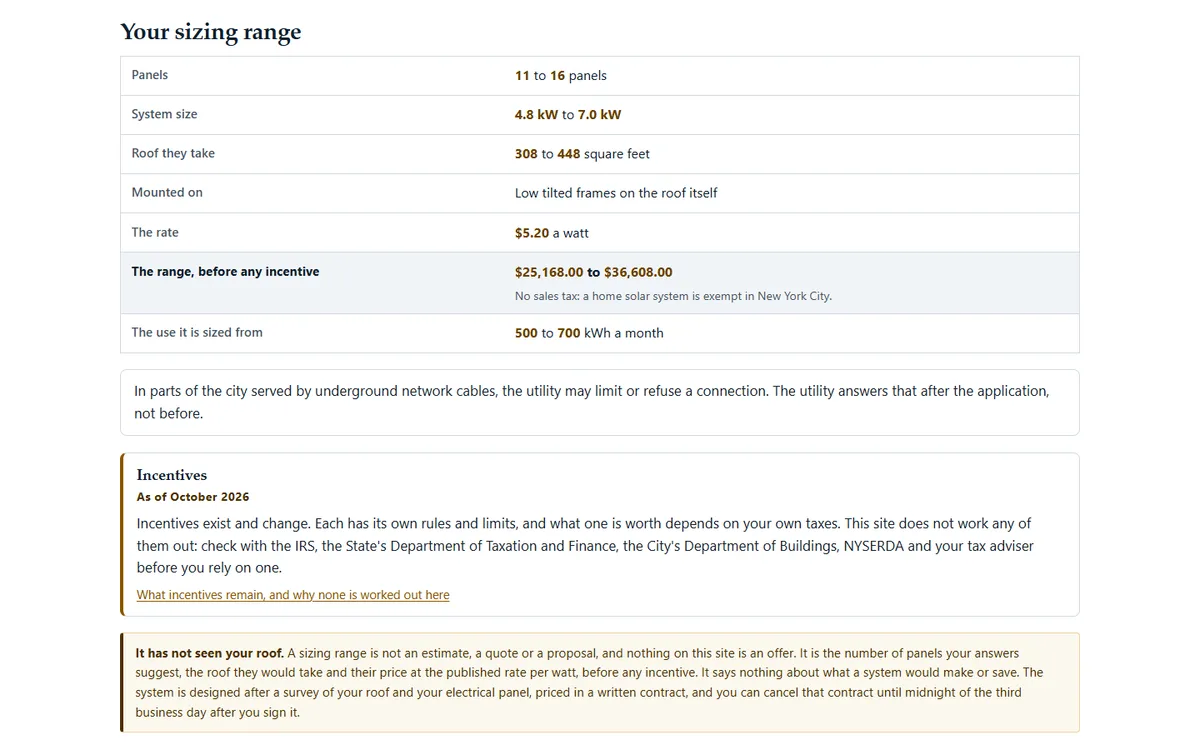
Fifty-one pages for a residential solar installer in Queens, and a roof sizing planner that answers the first question honestly. A visitor describes the house, the roof, how it faces, the shade, the electrical panel and a typical month's use, and gets a range of panels, kilowatts, roof area and price at the published rate per watt, both ends printed the same size. It never prints a saving, a payback or an incentive amount. Sending it is an enquiry: it lands in an inbox, and nothing is booked until the survey.
$1,000$500one time · live in ~5 business days
Includes your domain for a year, a year of hosting at MaiaHost, SSL, and every page rewritten around your business.
Demonstration site. Woodside Copewick Solar, LLC is a fictional business invented for this demo — every phone number on it is literally 000-000-0000. The website itself is entirely real and built exactly as yours would be.
Why this design works for a residential solar installer
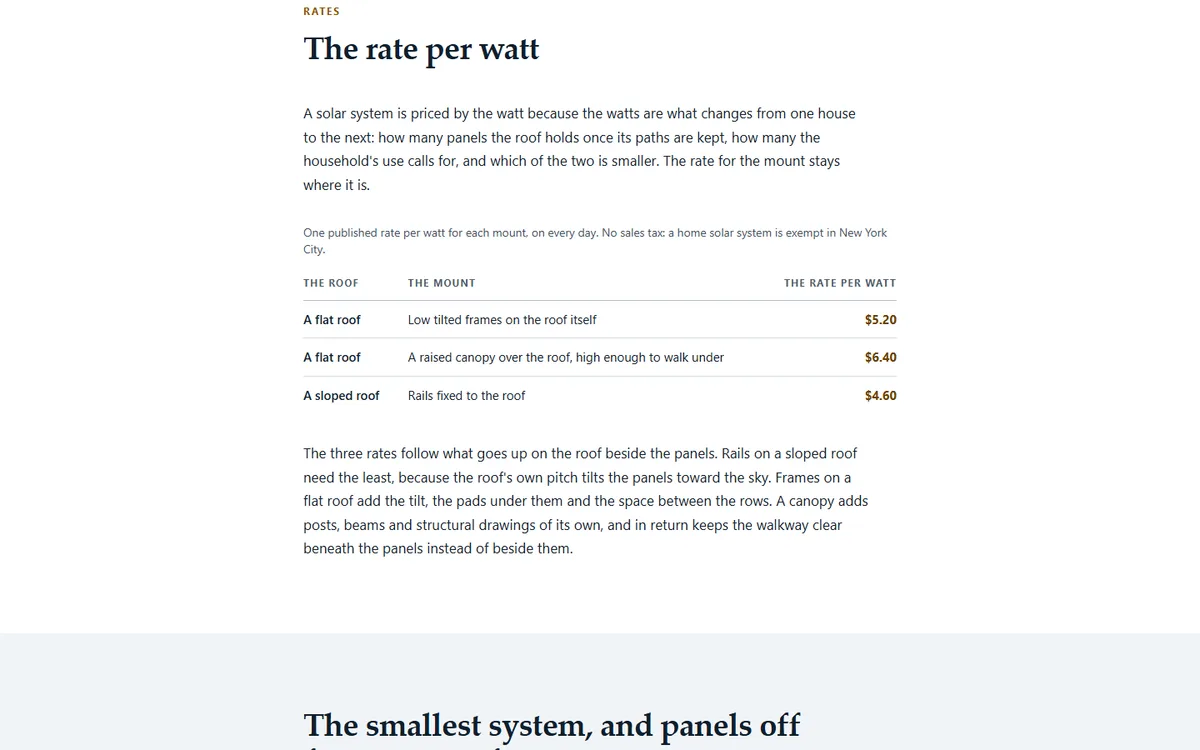
Most solar sites open with a savings calculator. This design opens with a sizing planner instead. It asks sixteen questions: the kind of house, whether it is in a historic district, the roof covering and its age, which way it faces, the shade, the roof size, the electrical panel and a typical month's use, in kilowatt-hours or dollars. It prints the number of panels, the kilowatts, the roof area they take and the price at one published rate per watt for each way of mounting them. The browser and the server read the same rules, so the range on the screen is the range in the inbox.
The law shaped the planner. In New York a sentence about what a system will save has to be backed by a written baseline, so the planner prints none, and it says so in a notice beside the range. The federal tax credit ended for home systems installed after 2025, and the remaining State and City incentives change, so they are named with a date and never worked out. The planner stops and says why for apartment buildings, businesses, batteries, renters, landmarked houses, slate and tile roofs and a roof too small for a system. It also adds a note when a roof needs replacing first, when nobody knows whether the house is in a historic district, or when an old fuse box needs a master electrician.
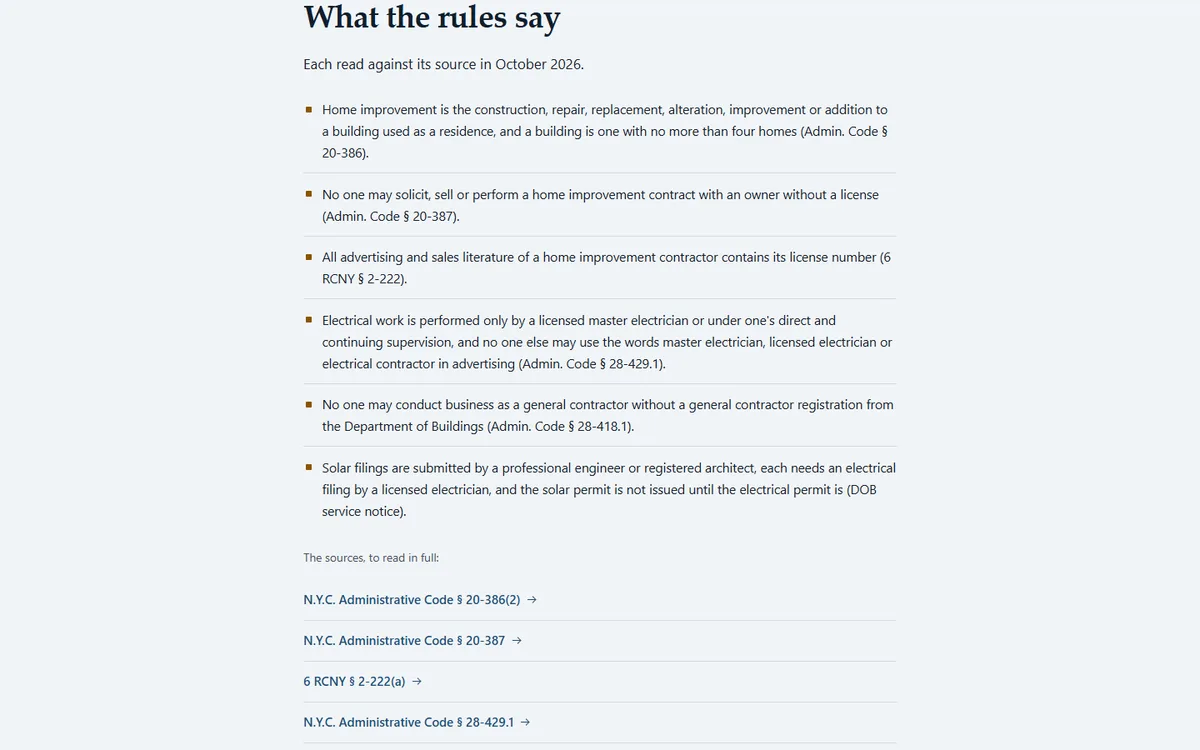
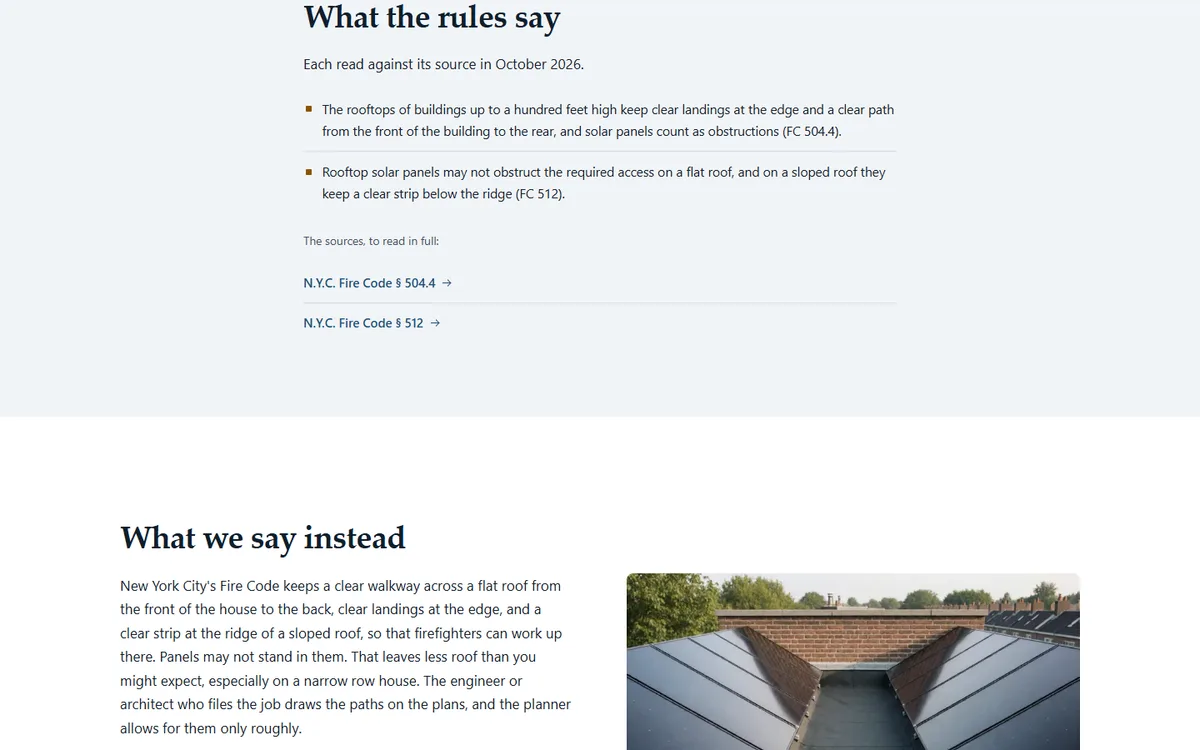
And it explains what the trade usually leaves vague. Solar in New York City is home improvement work, so the license page names the four credentials a real installer works under. The fire code keeps clear paths on every roof, and the site describes them with the sections cited rather than one figure for every roof. The contract page lists what New York requires a solar contract to say, and the homeowner can cancel until midnight of the third business day. Thirteen pages quote what solar sites commonly advertise, from 'never pay Con Ed again' to 'solar for free', and answer each claim with the rule and its source.
The planner prints panels, kilowatts, roof area and money at the published rate per watt, both ends the same size. It says nothing about what a system would make or save: in New York that sentence needs a written baseline only a real survey can give.
The federal credit ended for systems installed after 2025. The State credit and the City's property tax abatement remain, with their own rules and limits. The site says which exist as of October 2026, where to check them, and works none of them out.
When the use calls for more panels than the roof holds once the fire code's clear paths are kept, the roof sets the range and the planner says so. A roof near the end of its life is replaced first, by a roofer, before the panels go on.
Name, e-mail, telephone, the ZIP code and a survey day. The server recomputes the range from the answers rather than trusting the browser, every enquiry is a new record, and enquiries are deleted 180 days after the preferred survey day.
Screenshots from the live site
These are screenshots of the real website, taken from the live demo. Nothing here is a mockup — open it yourself and every one of these pages loads.
Mobile first, not mobile afterthought
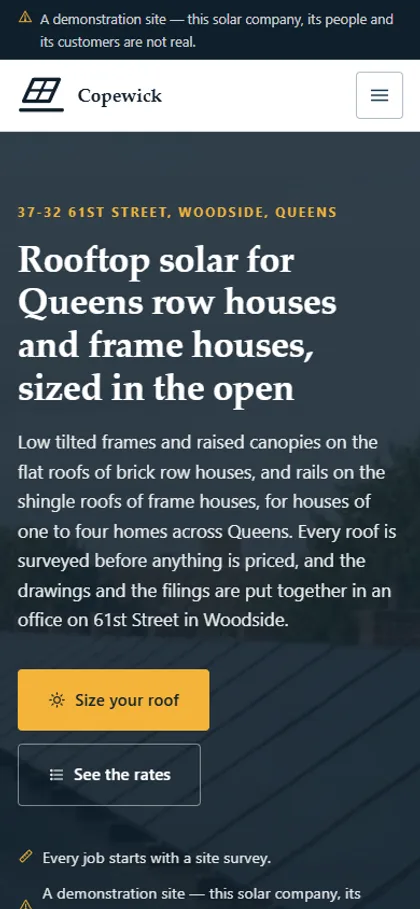
Local service searches are overwhelmingly done on phones, so the phone layout is the one we design first and test hardest. Text stays readable without zooming, the phone number stays reachable with a thumb, and nothing needs a horizontal scroll.
Every page, listed
51 indexable pages, each with its own title, description, structured data and a place in the sitemap. That is 51 chances to appear in a search instead of one.
What $500 covers
You get the same structure and design system with your business in it — your name, logo, colours, photographs, services, prices and locations, and every page rewritten for you. Two businesses starting from this design do not end up looking like each other.
Pages you do not need come out. Pages you need that are not there can be added at $90 each. The local SEO — titles, descriptions, structured data and the copy itself — is retargeted from Woodside to wherever you actually work.
Your domain name
First year included, registered in your name
One year of MaiaHost hosting
Fast EU LiteSpeed hosting, daily backups, 24/7 monitoring
SSL certificate
HTTPS from the first minute, auto-renewing
Your branding
Your business name, logo, colours and typography
Your content
Every page rewritten around your business, services and prices
Your photographs
Your images placed and optimized — or we keep the demo imagery
Local SEO retargeted
Titles, descriptions, schema and copy aimed at your city
Working contact form
Spam-protected, delivering to your inbox
Google Search Console
Verified and your sitemap submitted
One revision round
Tell us what to change after the first build — included
30 days of free fixes
Post-launch corrections and small tweaks on us
You own everything
Files, design, content and domain — move host any time
Who this suits
Not quite your trade? Designs adapt more easily than people expect — the structure matters far more than the industry it was written for. Tell us what you do and we will say honestly whether this one fits.
Questions
It shouldn't. In New York a statement about what a solar system will save is regulated, and it needs a written baseline from the customer's own bills and roof. The planner sizes the system and prices it at your published rate; the savings conversation belongs in the written proposal after the survey.
Yes, and they should. Solar on a home in New York City is home improvement work, so your Home Improvement Contractor license number goes in every advertisement, along with your master electrician and your State registration where they apply. This demonstration is a fictional company, so it holds none and says why.
Incentives change, and what one is worth depends on the customer's own taxes. The site names which incentives exist, dated, and links to where they are checked. A figure that was right when it was written is how a solar site ends up promising a credit that has ended.
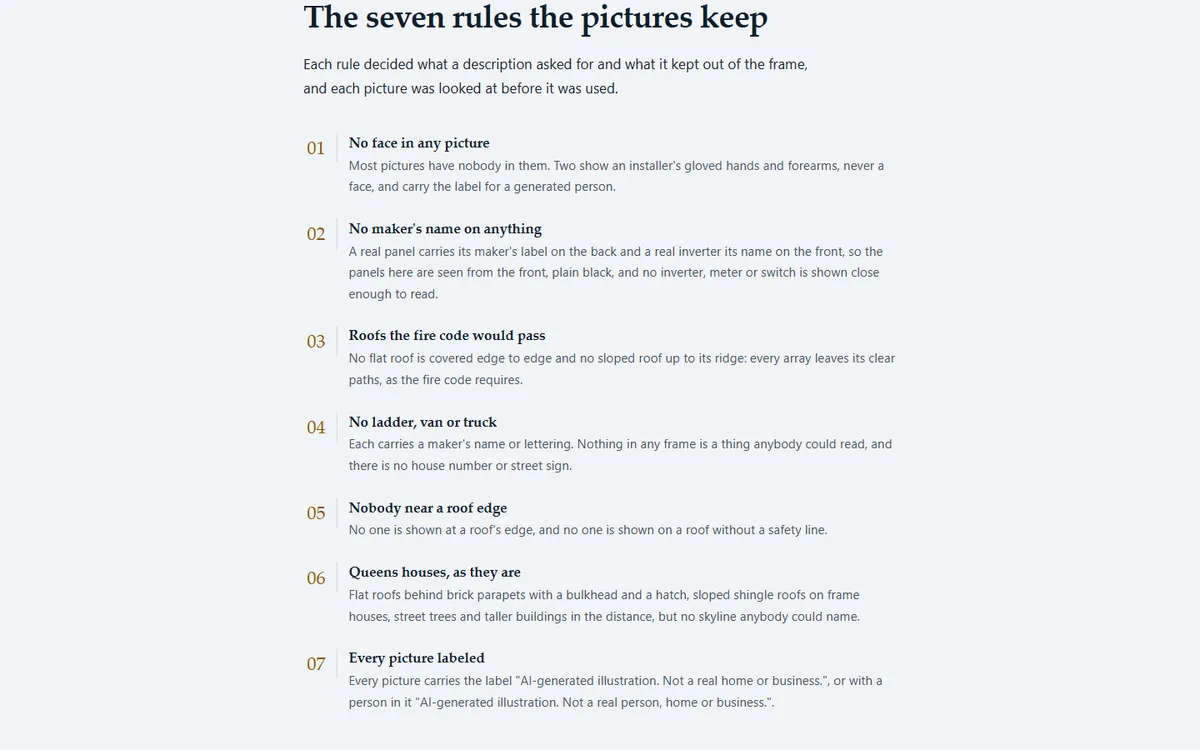
Then the equipment page names it, describing the panel by its maker's name the way any reseller may. This demonstration is a fictional company that installs nothing, so it names no brand at all, and no maker's label appears in any picture.
No. Every picture on this demonstration was generated and says so on the picture. No ladder, van, inverter or maker's label appears, and nobody's face is shown. Your own photographs of your own installs replace them.
More general questions are answered on the sample websites page.
Other ready-made designs
Twelve practice areas, twelve attorney profiles and the disclaimers a legal site needs.
$1,000$500
See detailsThirteen collections, delivery areas and a gallery designed around your own photographs.
$1,000$500
See detailsFourteen services, a published price list and a tax calendar that earns links every year.
$1,000$500
See details$500 one time, live in ~5 business days, with your domain and a year of hosting included. Send us a short brief and you get a fixed written quote within one business day — free, no obligation.
Or call us on +1 646 736 4779 — we answer 24/7.

