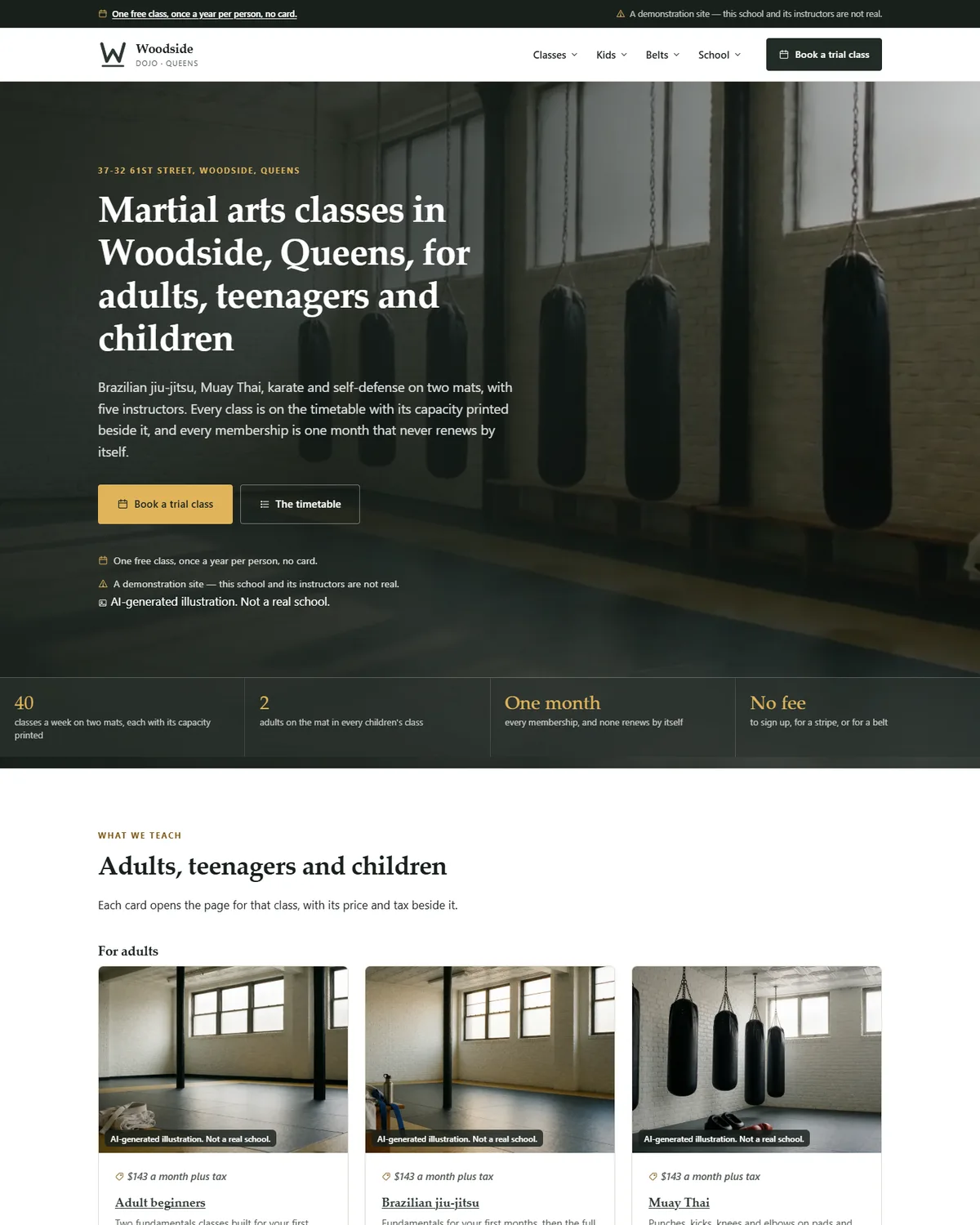
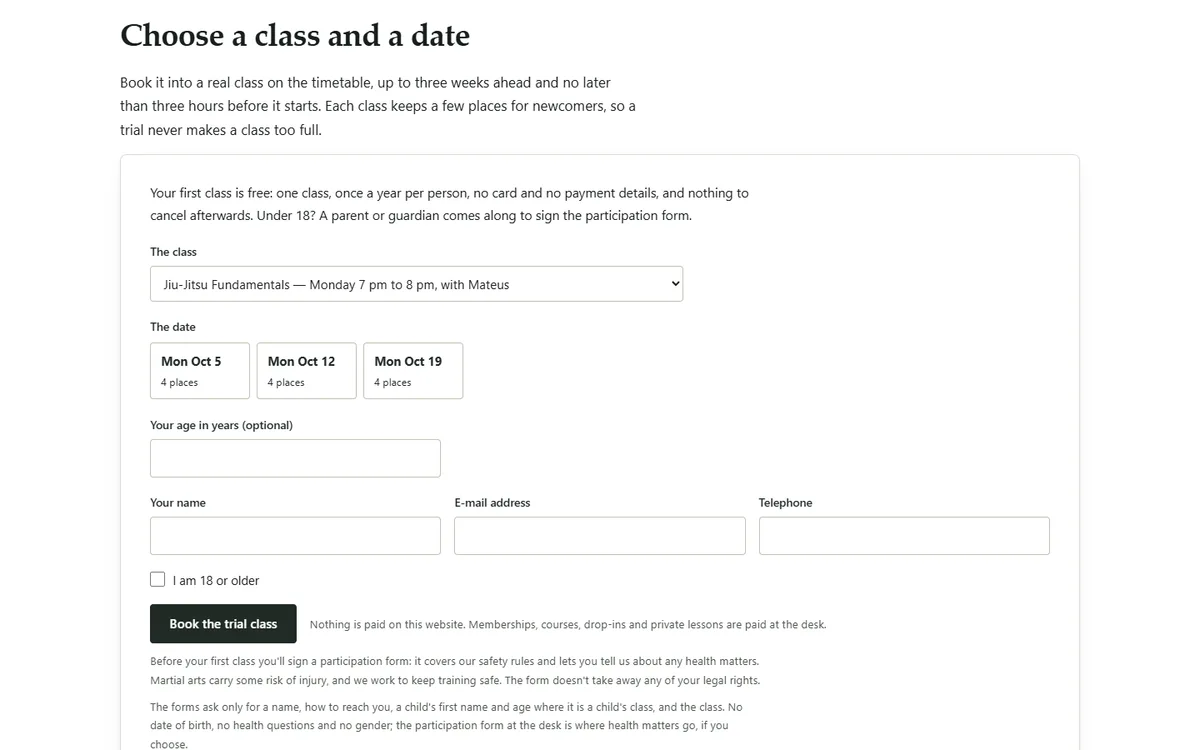
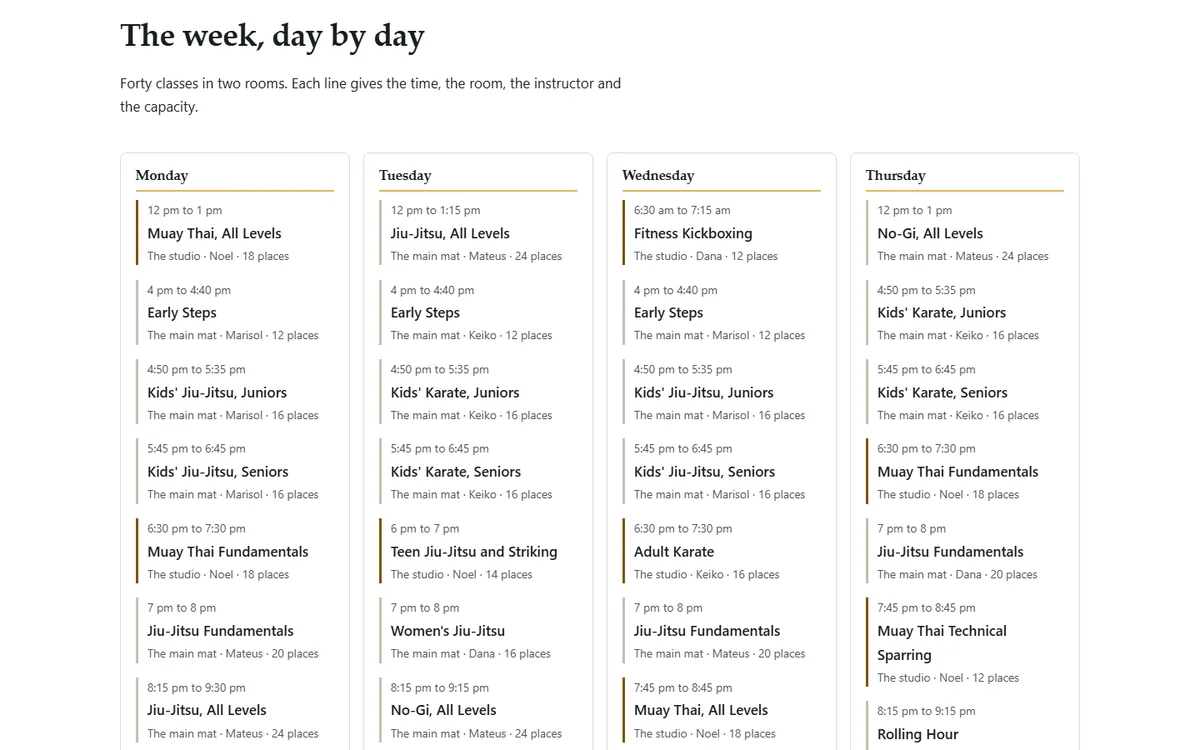
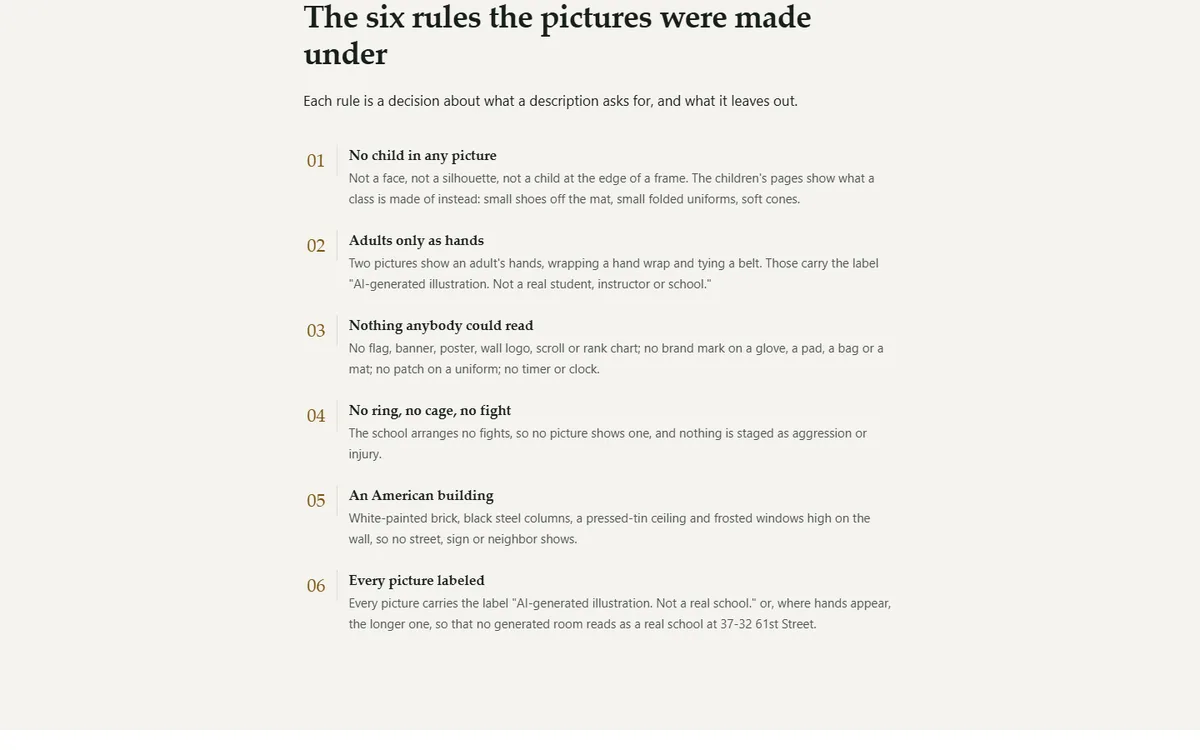
A martial arts school's website is read by an adult deciding whether to walk onto a mat, and by a parent deciding about a child. So on this design every class sits on one timetable with its room, its instructor and its capacity printed, and a visitor books a trial class into a real dated class, up to three weeks ahead. Children's classes and the self-defense courses keep a fixed roster: a family asks for a place, gets one at once if there is room, or joins the waiting list in order, and when a place frees up the next family is offered it by e-mail and has forty-eight hours to hold it.
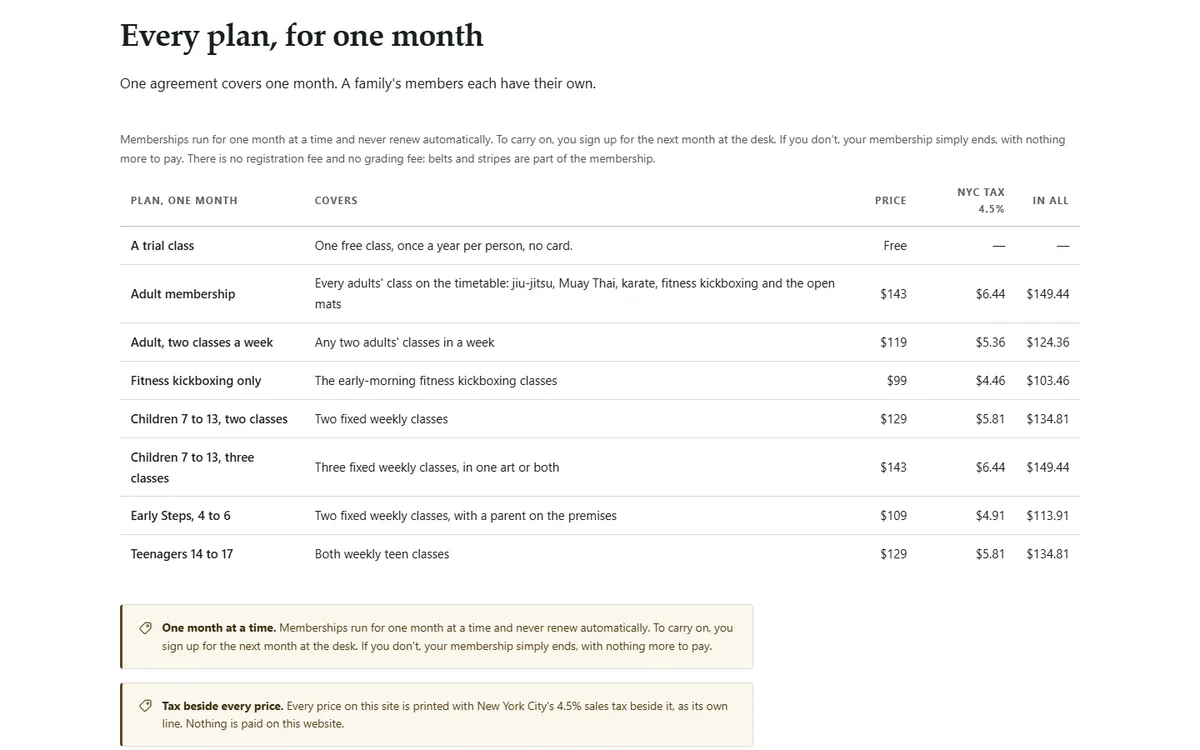
New York's health club law covers martial arts schools, so the product is shaped by it. Every membership is one month that never renews by itself, every payment stays under the line above which a school must post a bond, the city's sales tax is printed beside every price as its own line, and the three-day right to cancel, the later rights and the refund within ten business days are printed in full. A member can cancel from the website, as the law now requires, and the form answers the same way whatever is typed.
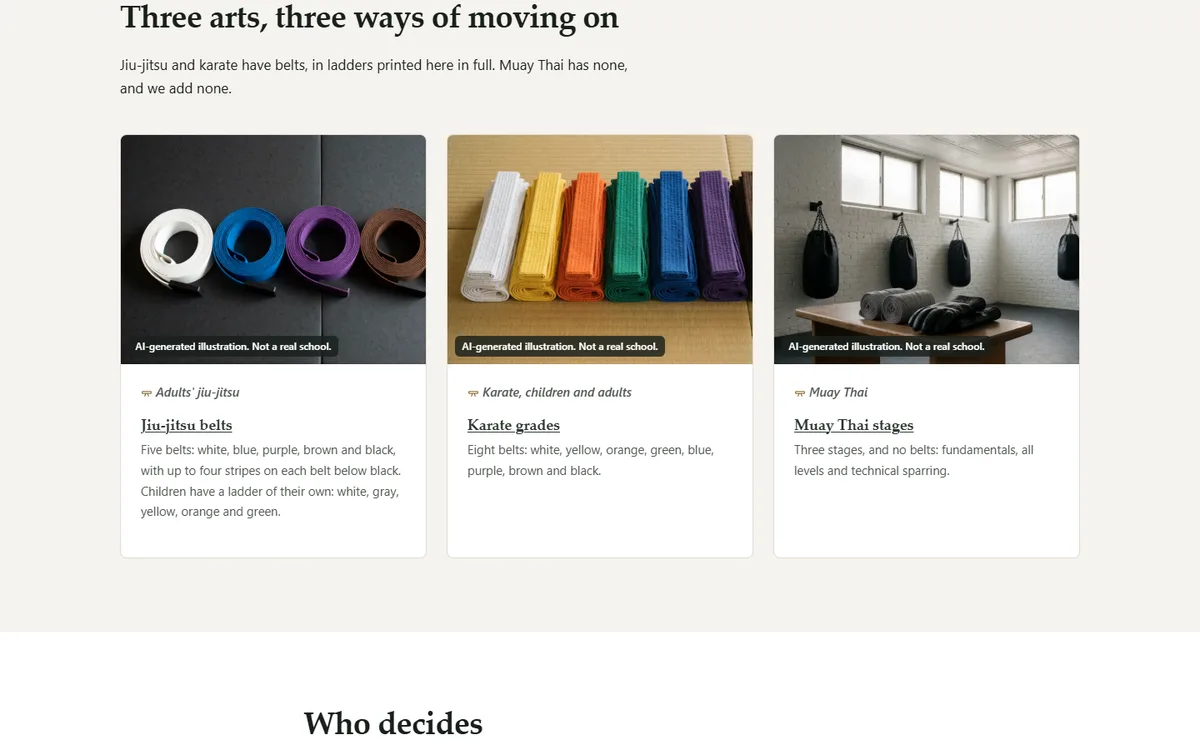
And the school claims only what it can. Belts are its own curriculum, with no federation, association or 'certified' anywhere; no self-defense course promises anybody safety; no class promises a child confidence or better grades; the school arranges no fights and runs no pickup or camp. Nine pages quote what martial arts schools commonly advertise — 'Bully-proof your child!', 'Certified black belt instructors', 'No contracts!' — and answer each with the rule and its source.