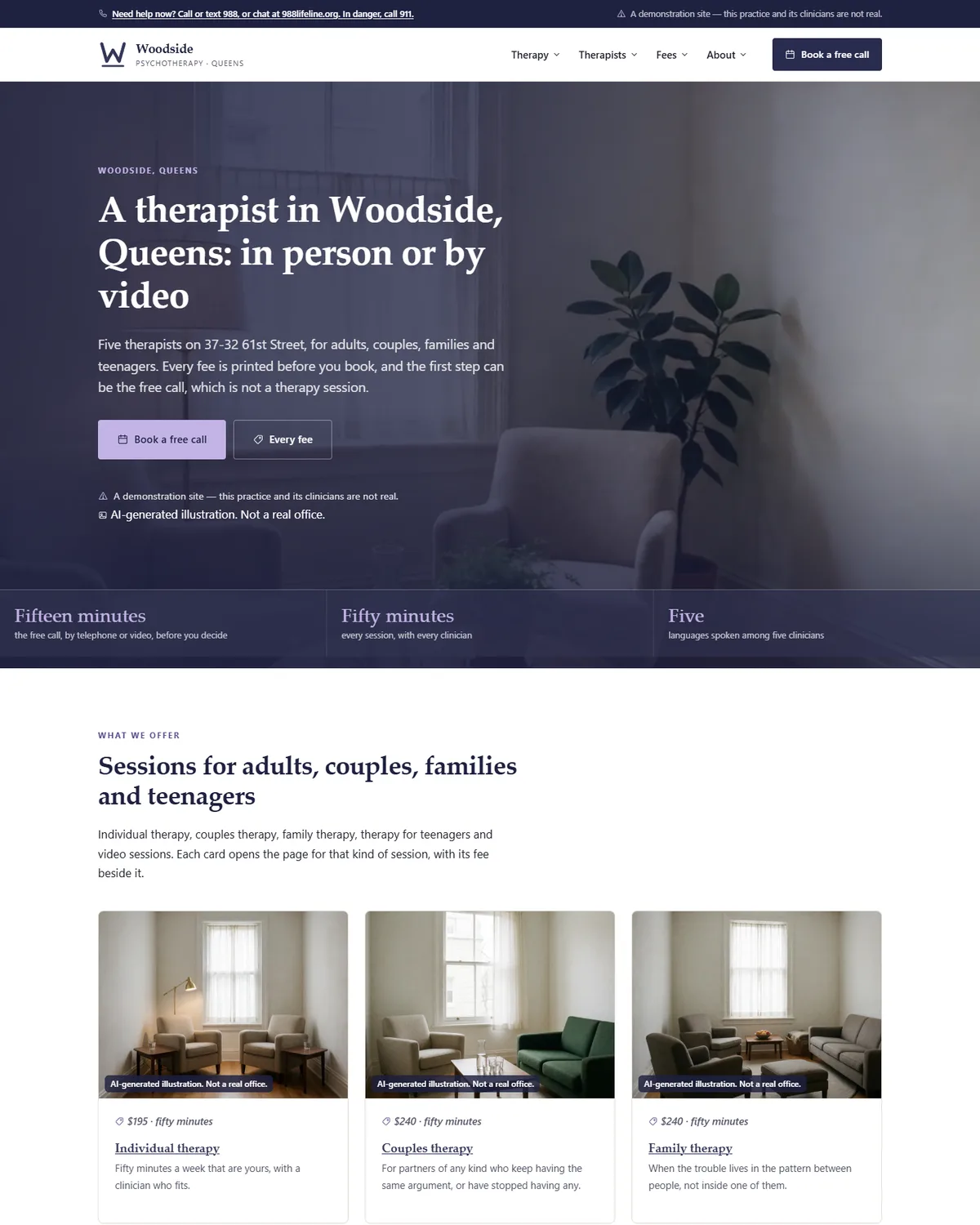
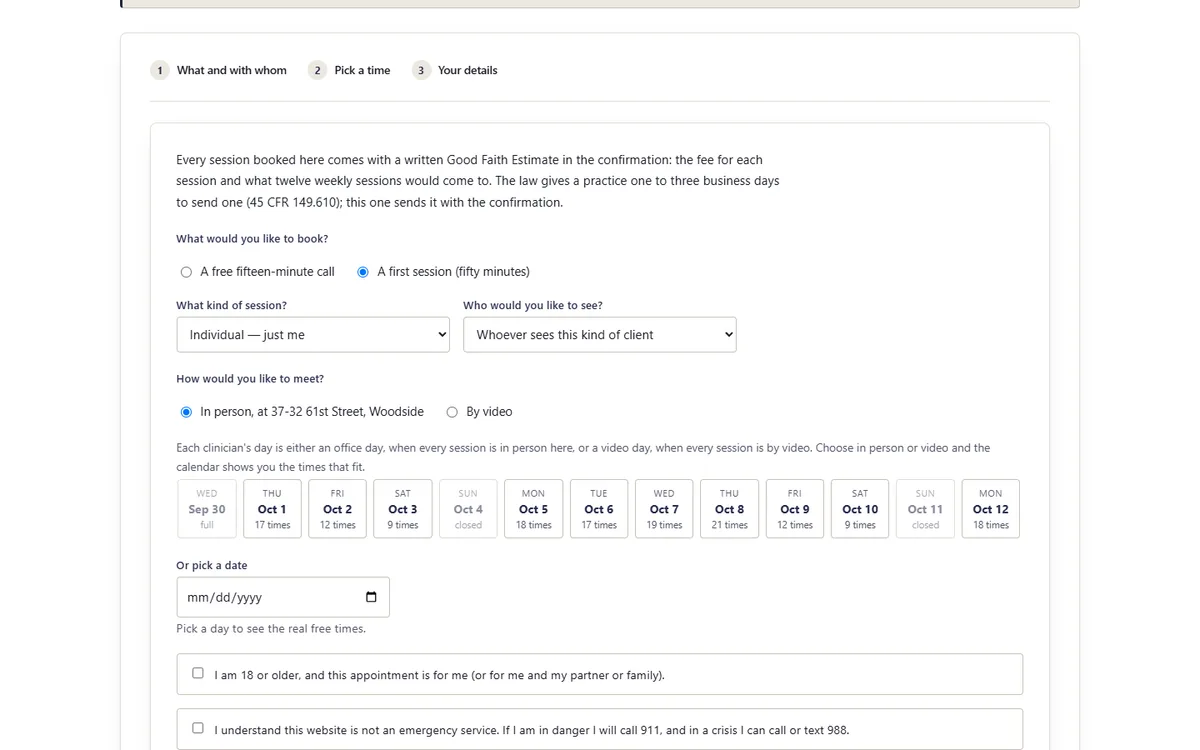
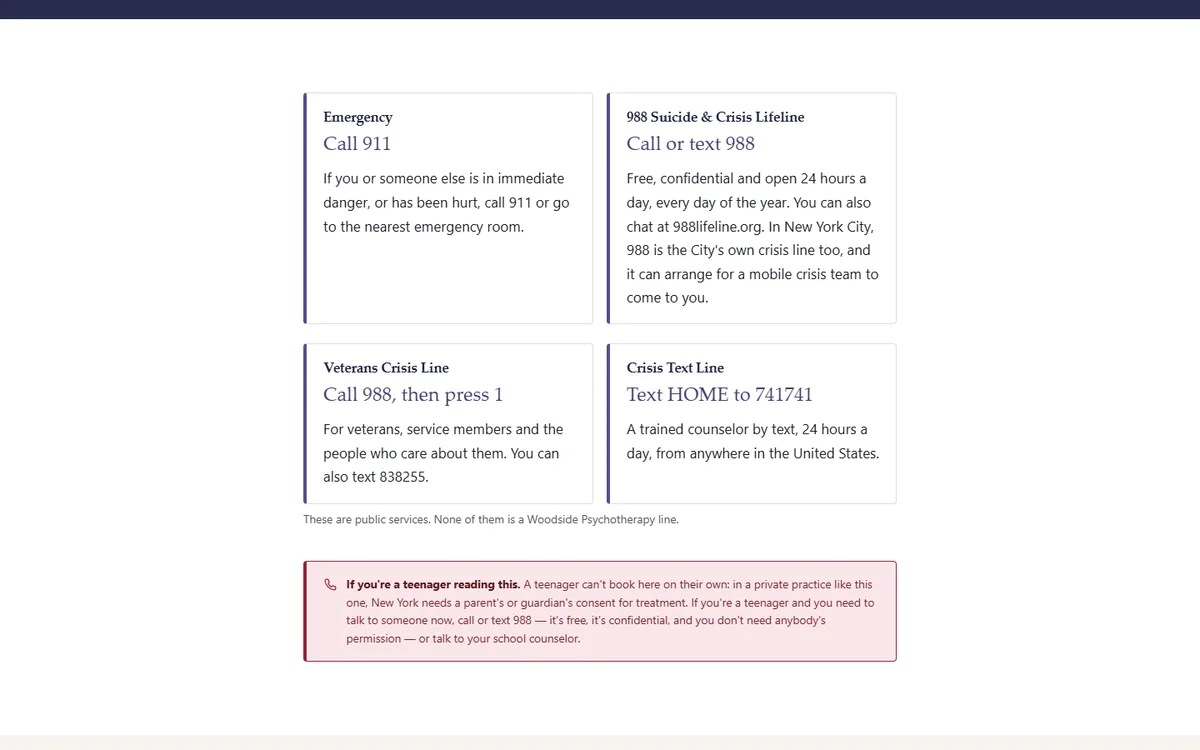
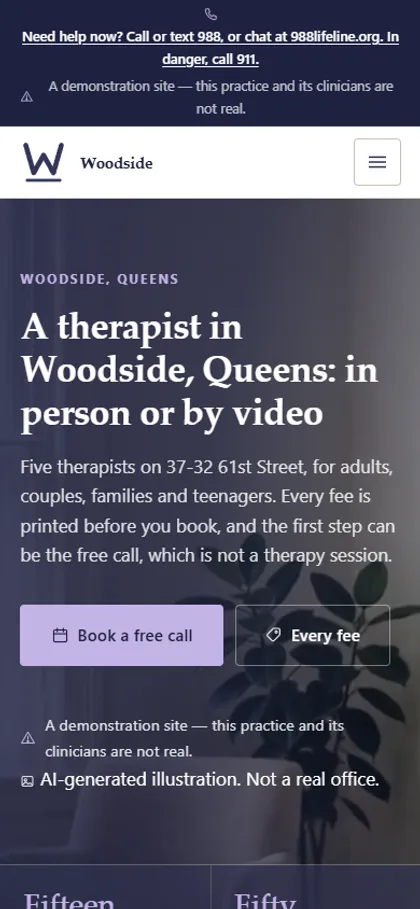
A therapy practice's website is read by people on a bad day. So on this design the crisis line is the first thing on every page and the last thing in every footer, the practice says plainly that it is not an emergency service, and nothing on the site asks anybody to describe what is wrong. A visitor books a free fifteen-minute call by telephone or video, or goes straight to a first fifty-minute session, by choosing a kind of session, a clinician (or whoever has the time), in person or by video, a day and a time. The form asks for a name, an e-mail address and a telephone number, and ticks: nothing more.
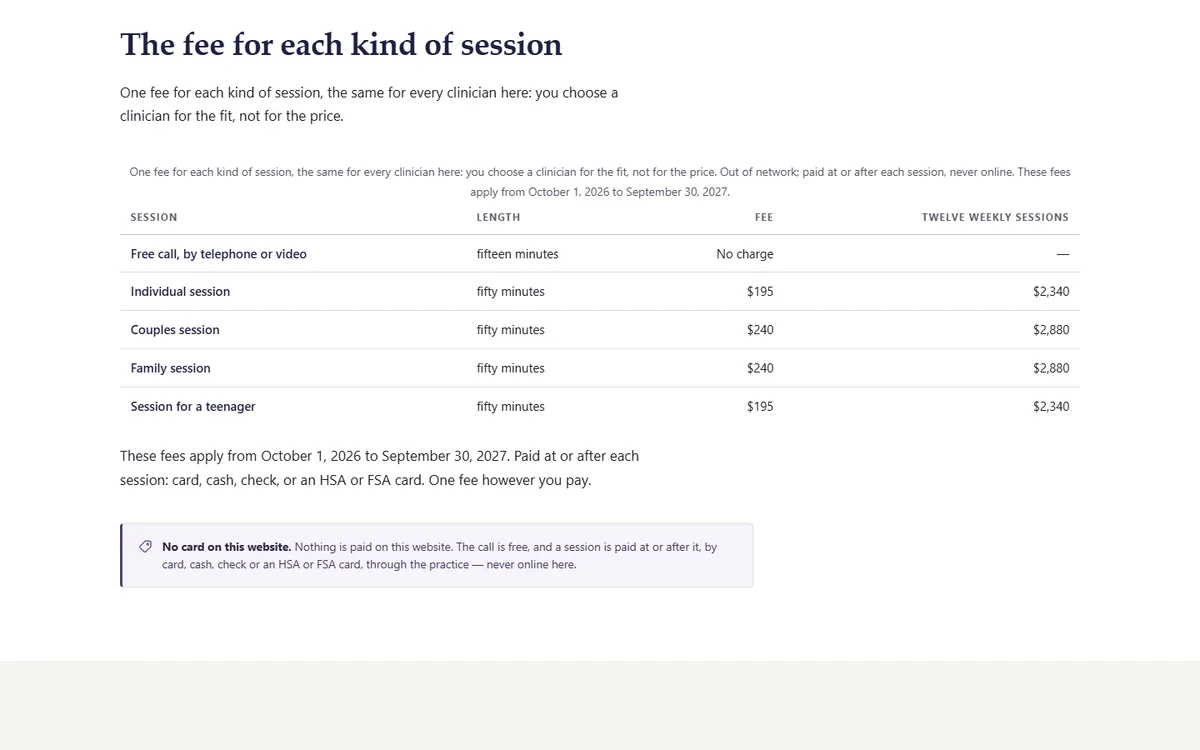
Every fee says what it is. One fee for each kind of session, the same for every clinician, with the dates it applies. The practice is out of network and says so, with what a superbill is and what it is not. Every session booked comes with a written Good Faith Estimate, as federal law requires for self-pay clients, and the late-cancellation rule is printed case by case, with the first one in any twelve months waived and never the words non-refundable.
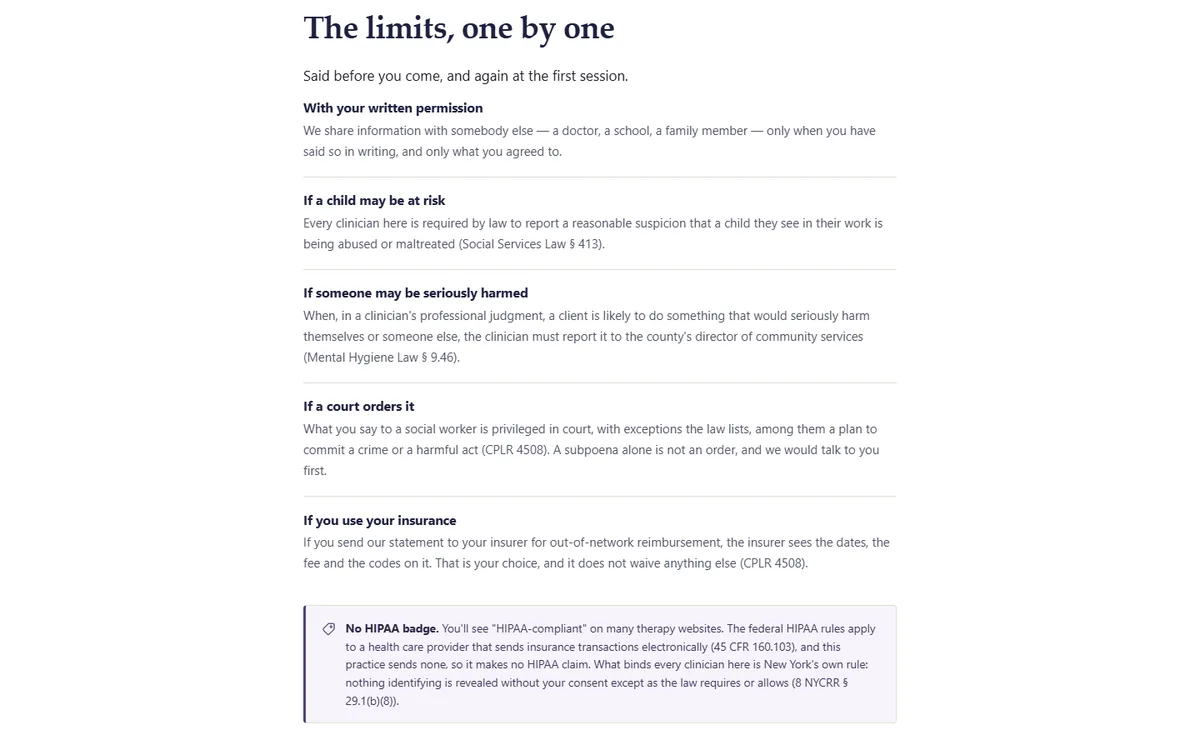
And the law is quoted, not paraphrased. The title licensed clinical social worker belongs to people New York has licensed, so the site explains that rule and claims no license for its invented clinicians. The limits of confidentiality are listed with their sources, teenagers are seen with a parent's or guardian's consent and the site says why, and video sessions are for clients who are in New York State. Twelve pages quote what therapy practices commonly advertise — 'No waitlist!', 'Feel better in six sessions — guaranteed', 'First session free!' — and answer each with the rule and its source.