
Physical therapy clinic website design
Thirty-five condition pages, five therapist calendars, and honest pages about what PT cannot fix.
- 63 pages
- Booking app
- 77 images
$1,780$890
See detailsReady-made · live demo online
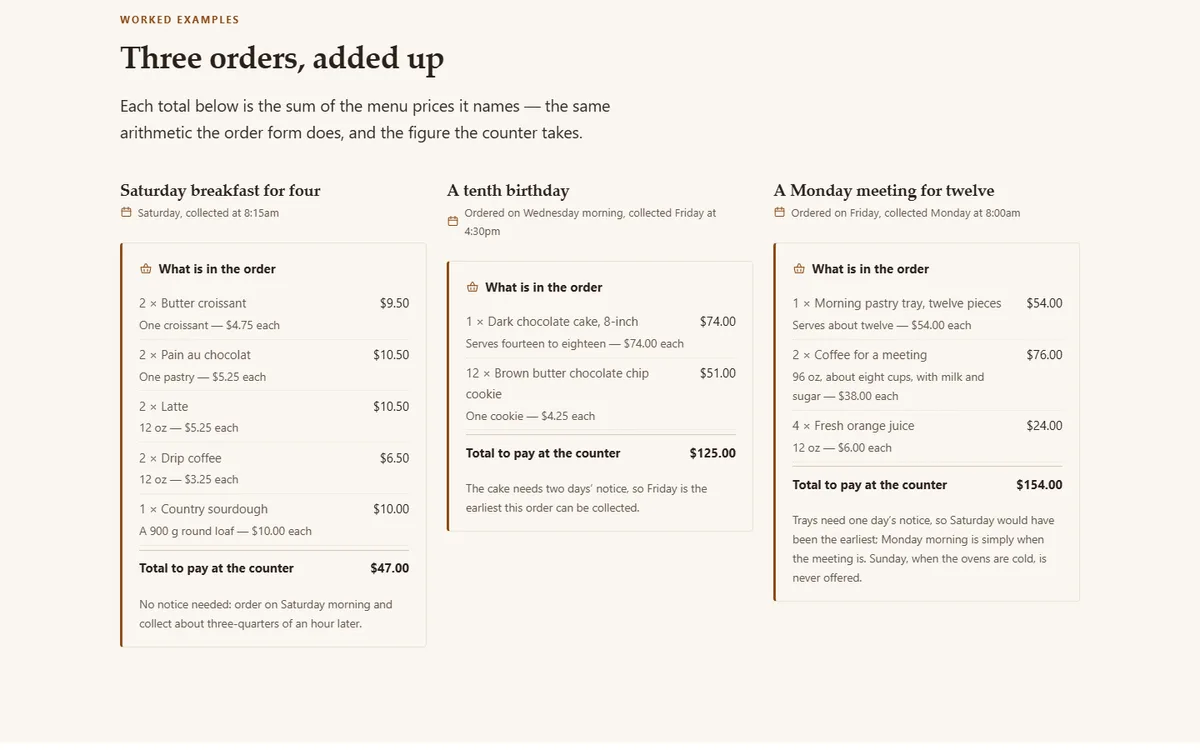
Forty-five pages for a neighbourhood bakery and café, and the ordering software a counter actually needs: every item on the menu priced with an Add button, a cart that survives a closed tab, fifteen-minute pickup windows that hold a few orders each, and two days’ notice for a cake counted in the days the ovens are on. Nothing is paid on the website. The total is paid at the counter, and the site says so in the cart, on the confirmation and in the e-mail.
$1,780$890one time · live in ~10 business days
Includes your domain for a year, a year of hosting at MaiaHost, SSL, and every page rewritten around your business.
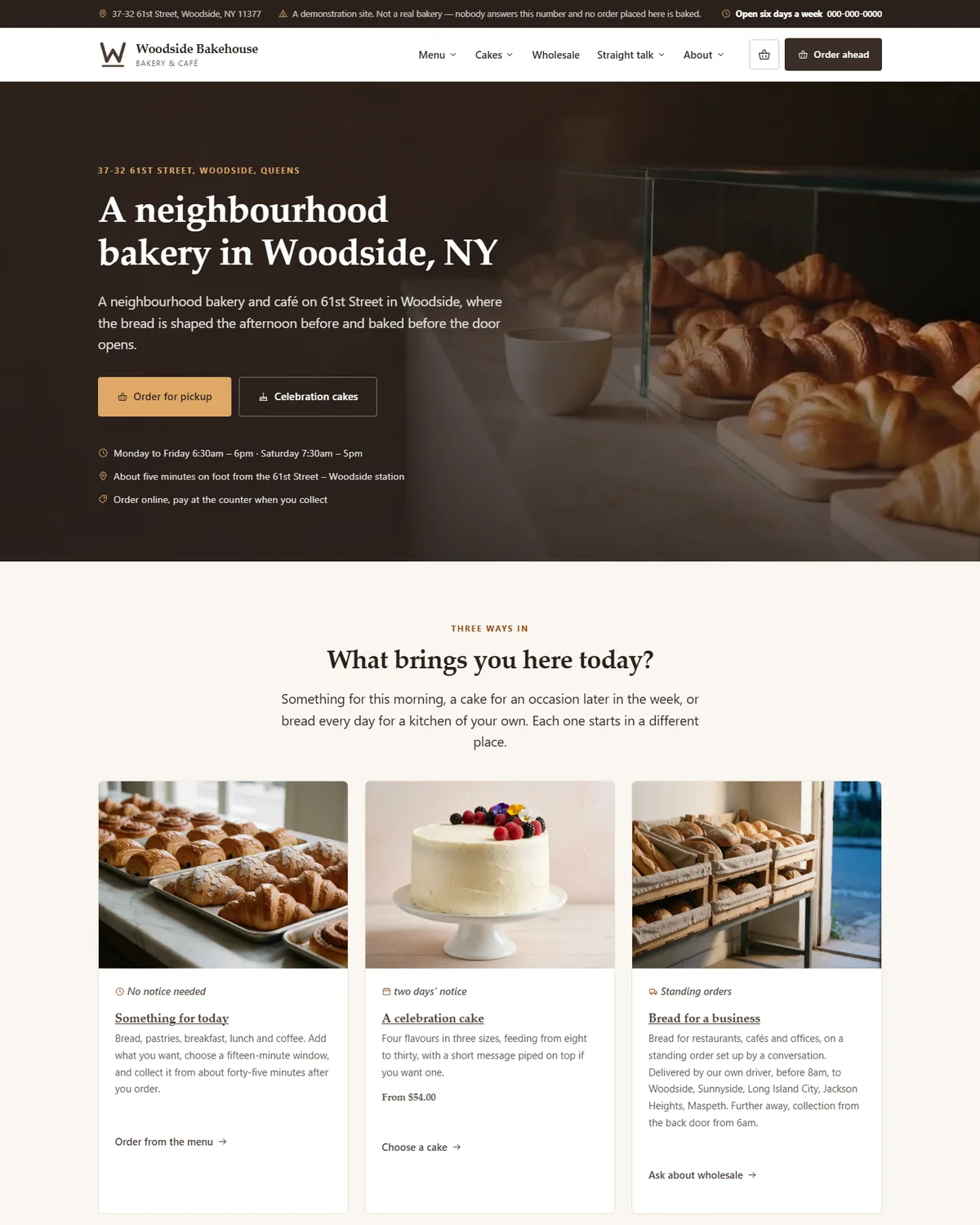
Demonstration site. Woodside Bakehouse & Café, LLC is a fictional business invented for this demo — every phone number on it is literally 000-000-0000. The website itself is entirely real and built exactly as yours would be.
Why this design works for a bakery and café
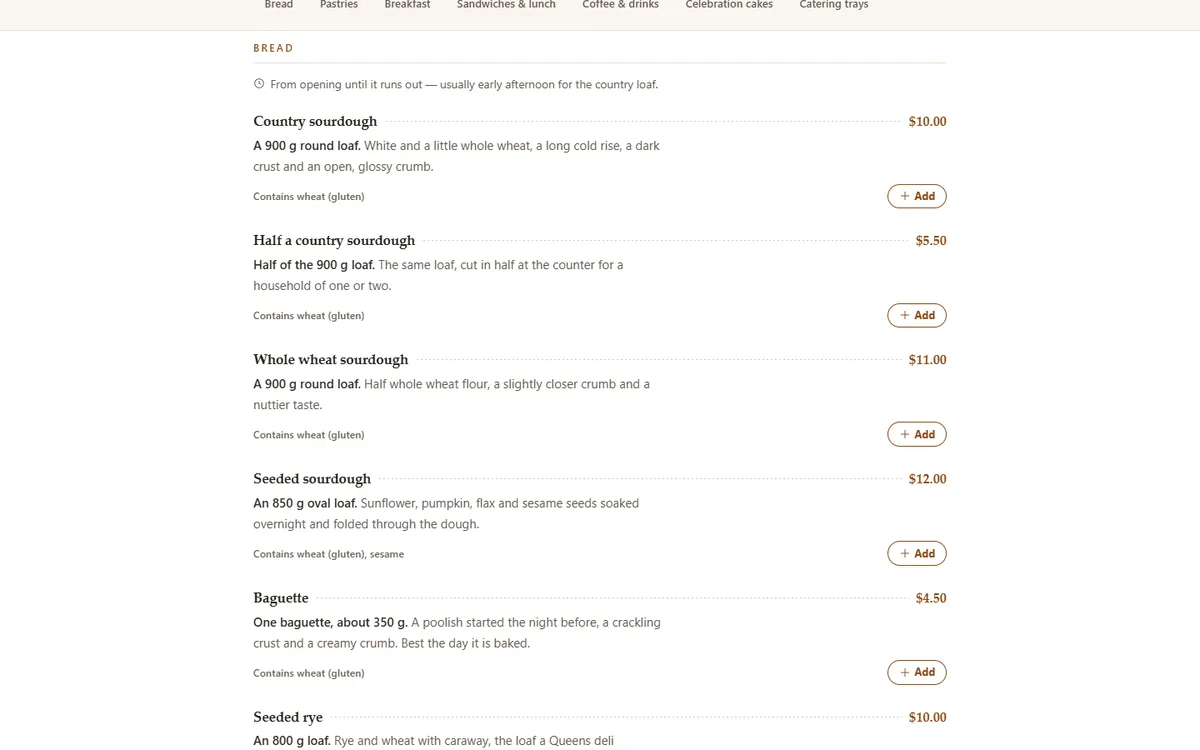
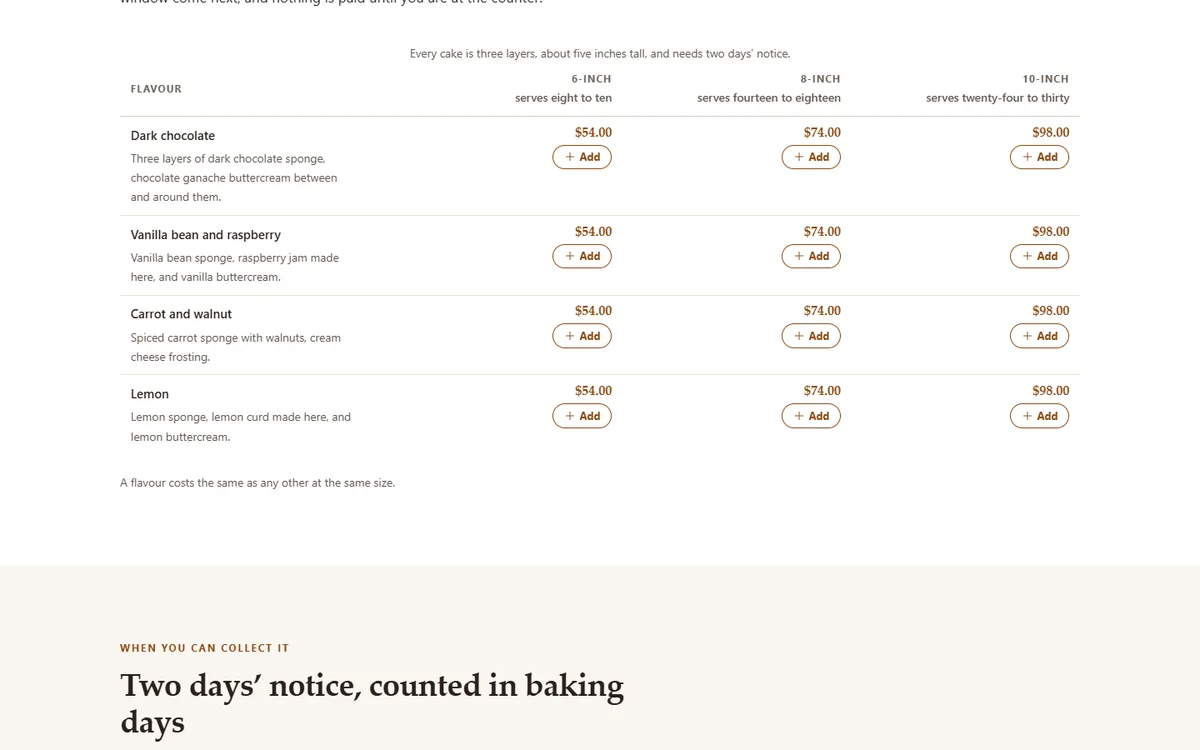
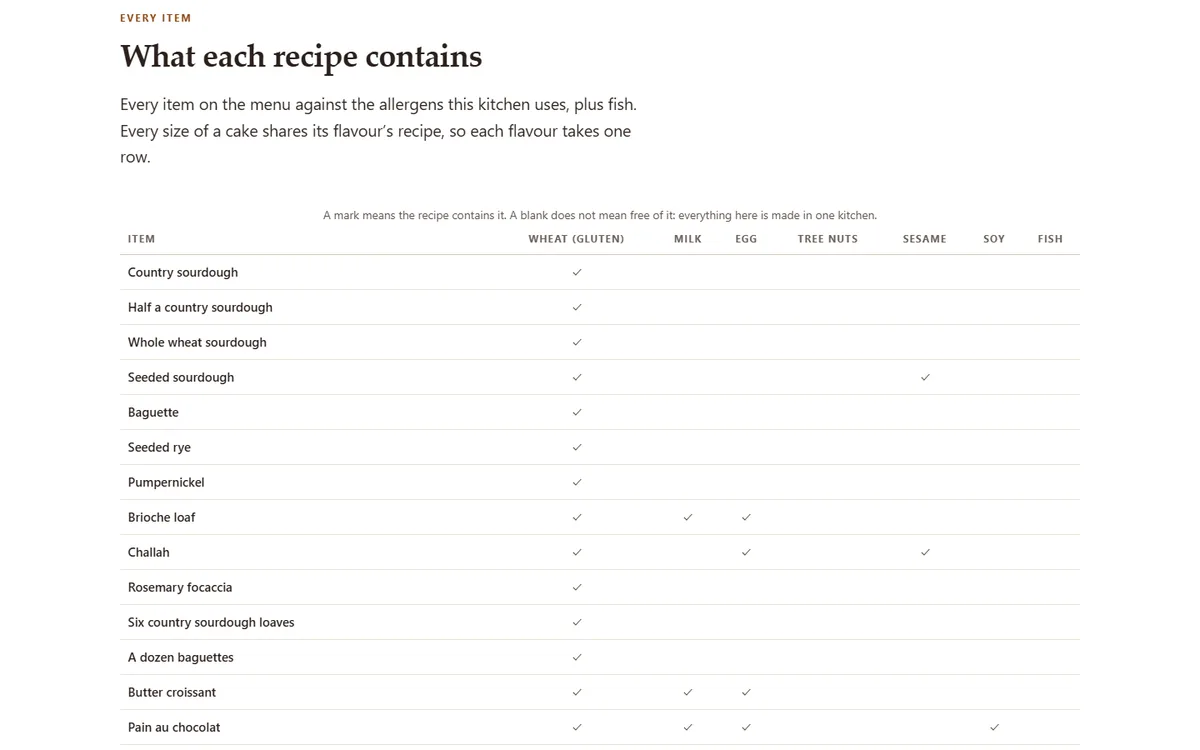
A bakery’s online order is not a restaurant booking and it is not a shop. Nothing ships and nobody reserves a table; what goes wrong is time. Ten croissant orders land in the window when the counter is already swamped, or somebody asks for a birthday cake tomorrow when tomorrow’s layers were baked yesterday for somebody else. This design is built around exactly that. Every one of the 68 items on the menu is a line with a price and an Add button, and the cart lives in the browser and survives a closed tab. Checkout offers a pickup day, then a fifteen-minute window, and each window holds a set number of orders: four by default, changed for any single window on the kitchen screen.
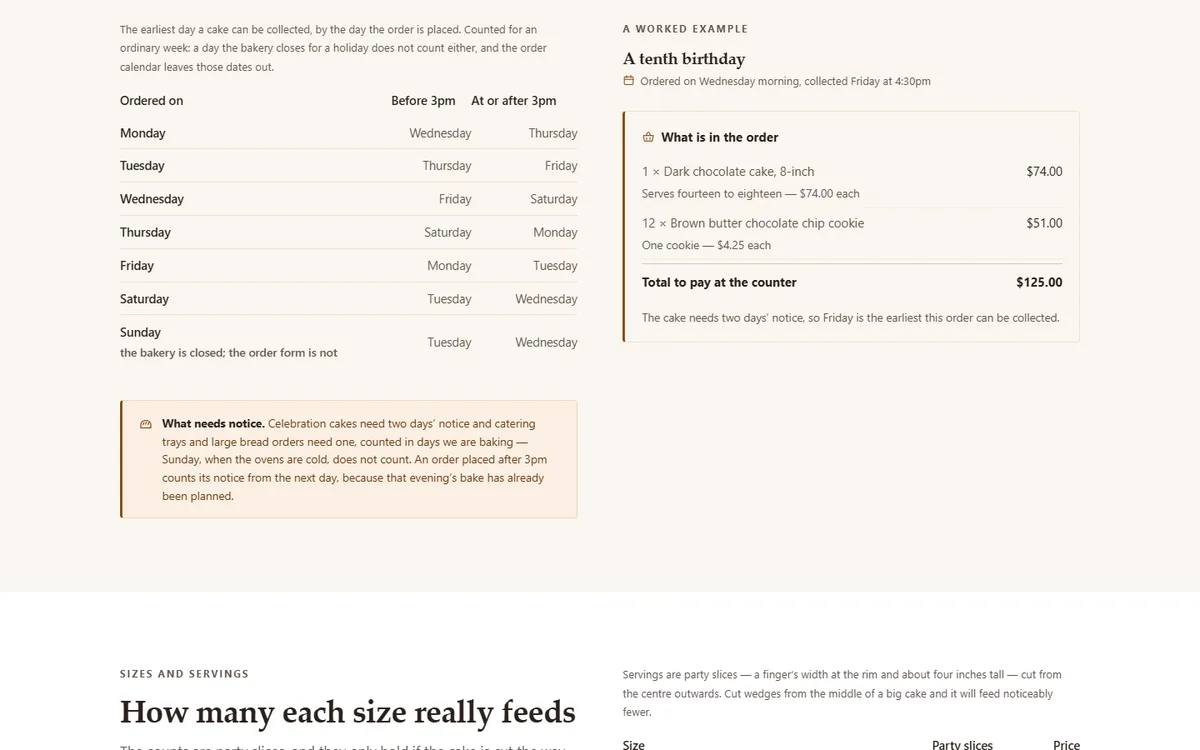
Notice is the part most ordering systems get wrong. Cakes need two days and catering trays one, and they are counted in days the bakery is baking. Sunday, when it is closed, does not count, and neither does a holiday closure. An order placed after 3pm counts from the next day, because that evening’s bake is already planned. The day picker only offers days the slowest thing in the cart can be ready, and the server checks again: a two-day cake posted straight at the order endpoint for tomorrow is refused with the earliest date and the name of the cake. That was tested against the live site.
There is no payment, on purpose. The order is placed, confirmed on the page and by e-mail with a link to view or cancel it, and paid at the counter by card or cash when it is collected. The total is priced again on the server from the menu, so a total edited in the browser is ignored. When three customers take the last place in a window at the same instant, exactly one gets it. On the other side of the counter, a kitchen screen lists the day by pickup window, marks orders ready, collected and paid, and adds up tonight’s bake for everything ordered with notice.
Two days’ notice for a cake means two days of baking, not two days on a calendar. Sunday is closed and does not count, a holiday you add on the kitchen screen does not count, and an order after 3pm starts counting tomorrow. The page offers only the days the cart can actually be ready, the server refuses anything earlier with the date and the reason, and the notice table on the cakes page is generated from the same rule rather than typed.
Paying at the counter is how most small bakeries already take a pre-order, and it removes the three costs a payment page brings: card fees on a $4.75 croissant, refunds when somebody cancels, and a checkout to keep secure. The site says it plainly in the cart, on the confirmation and in the e-mail, so nobody arrives expecting to have paid. If you do want payment online, that is our Commerce package.
A window that holds four orders must never take a fifth because two people pressed the button in the same second. The count is made inside the transaction that places the order, against a row it has locked, and it is tested against the live site: the window is narrowed to its last place, three orders are fired at it together, and exactly one is placed. The other two are offered the nearest windows that still have room.
The browser sends item codes and quantities and nothing else it is trusted with. Every price is read from the menu on the server, each order line keeps the price it was sold at, and the live test posts an order carrying a one-cent total and one-cent prices and checks that the confirmation comes back at the menu’s total.
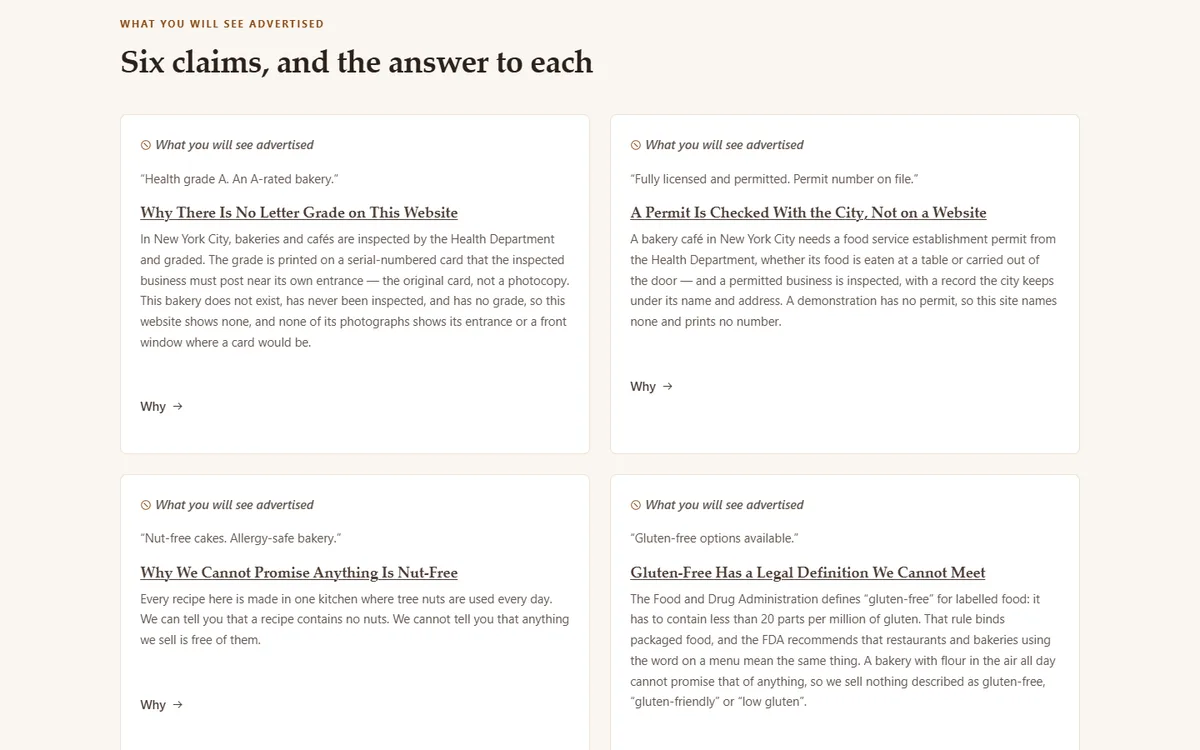
A letter grade drawn on a website, a permit number, “nut-free” from a kitchen that bakes with almonds, “gluten-free” where there is flour in the air. Each gets a page quoting the claim the way it is usually advertised and explaining in plain words why this bakery will not make it — citing the city or federal rule where there is one, and saying where a customer can check.
Screenshots from the live site
These are screenshots of the real website, taken from the live demo. Nothing here is a mockup — open it yourself and every one of these pages loads.
Mobile first, not mobile afterthought
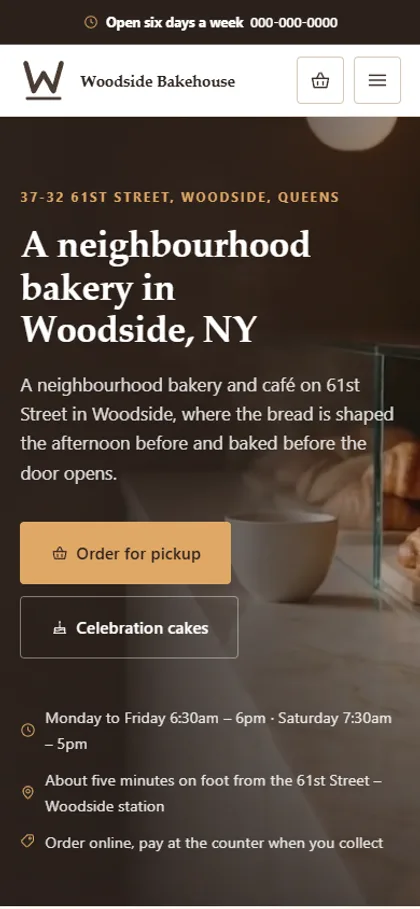
Local service searches are overwhelmingly done on phones, so the phone layout is the one we design first and test hardest. Text stays readable without zooming, the phone number stays reachable with a thumb, and nothing needs a horizontal scroll.
Every page, listed
45 indexable pages, each with its own title, description, structured data and a place in the sitemap. That is 45 chances to appear in a search instead of one.
Included — not an add-on
A cart, a pickup day and a fifteen-minute window, notice counted in baking days, and no payment — the order is paid at the counter. Behind it, the screen the counter and the kitchen work from.
The software runs on your own hosting and belongs to you. There is no monthly licence, no per-booking commission and no third party holding your customer list — which over a few years is usually worth more than the price of the website.
What $890 covers
You get the same structure and design system with your business in it — your name, logo, colours, photographs, services, prices and locations, and every page rewritten for you. Two businesses starting from this design do not end up looking like each other.
Pages you do not need come out. Pages you need that are not there can be added at $90 each. The local SEO — titles, descriptions, structured data and the copy itself — is retargeted from Woodside to wherever you actually work.
Your domain name
First year included, registered in your name
One year of MaiaHost hosting
Fast EU LiteSpeed hosting, daily backups, 24/7 monitoring
SSL certificate
HTTPS from the first minute, auto-renewing
Your branding
Your business name, logo, colours and typography
Your content
Every page rewritten around your business, services and prices
Your photographs
Your images placed and optimized — or we keep the demo imagery
Local SEO retargeted
Titles, descriptions, schema and copy aimed at your city
Working contact form
Spam-protected, delivering to your inbox
Google Search Console
Verified and your sitemap submitted
One revision round
Tell us what to change after the first build — included
30 days of free fixes
Post-launch corrections and small tweaks on us
You own everything
Files, design, content and domain — move host any time
Who this suits
Not quite your trade? Designs adapt more easily than people expect — the structure matters far more than the industry it was written for. Tell us what you do and we will say honestly whether this one fits.
Questions
Not in this design, and the site says so in the cart, on the confirmation page and in the e-mail: the order is paid at the counter when it is collected. That means no card fees on a single croissant and nothing to refund when somebody cancels. If you want payment taken online, that is our Commerce package at $1,490, and this design can be its front end.
Each fifteen-minute window has its own capacity. The default comes from one setting, and the manager can change any single window on any day — six orders at 8am, two at 2pm, none on the morning of a big delivery. The count is checked inside the transaction that places the order, so a window never takes more than it was given.
Notice is a number on each item, changed on the menu screen, and it is counted in days the bakery is open, so a closure you add is skipped automatically. The day picker and the order endpoint read the same number, so the page can never offer a day the server will refuse.
Not as it stands. Orders arrive on the kitchen screen and as an e-mail to the counter, and staff mark an order paid when the till has taken the money. Sending orders into a particular point-of-sale system depends entirely on the system, and we will quote it once we know which one you use.
No. It is a demonstration site, not a business: nobody answers the telephone number, no order placed on it is baked, and the site says so on every page. The order form does work and does send a confirmation e-mail, because that is what it is demonstrating. Every photograph was generated and nobody in the portraits exists; your version uses your menu, your prices and your own photographs.
More general questions are answered on the sample websites page.
Other ready-made designs
Thirty-five condition pages, five therapist calendars, and honest pages about what PT cannot fix.
$1,780$890
See detailsFive HTML menus with prices and allergens, plus table reservations allocated against a real floor plan.
$1,780$890
See detailsSix room pages with published nightly rates, and a date-range availability engine running on your own hosting.
$1,780$890
See details$890 one time, live in ~10 business days, with your domain and a year of hosting included. Send us a short brief and you get a fixed written quote within one business day — free, no obligation.
Or call us on +1 646 736 4779 — we answer 24/7.

