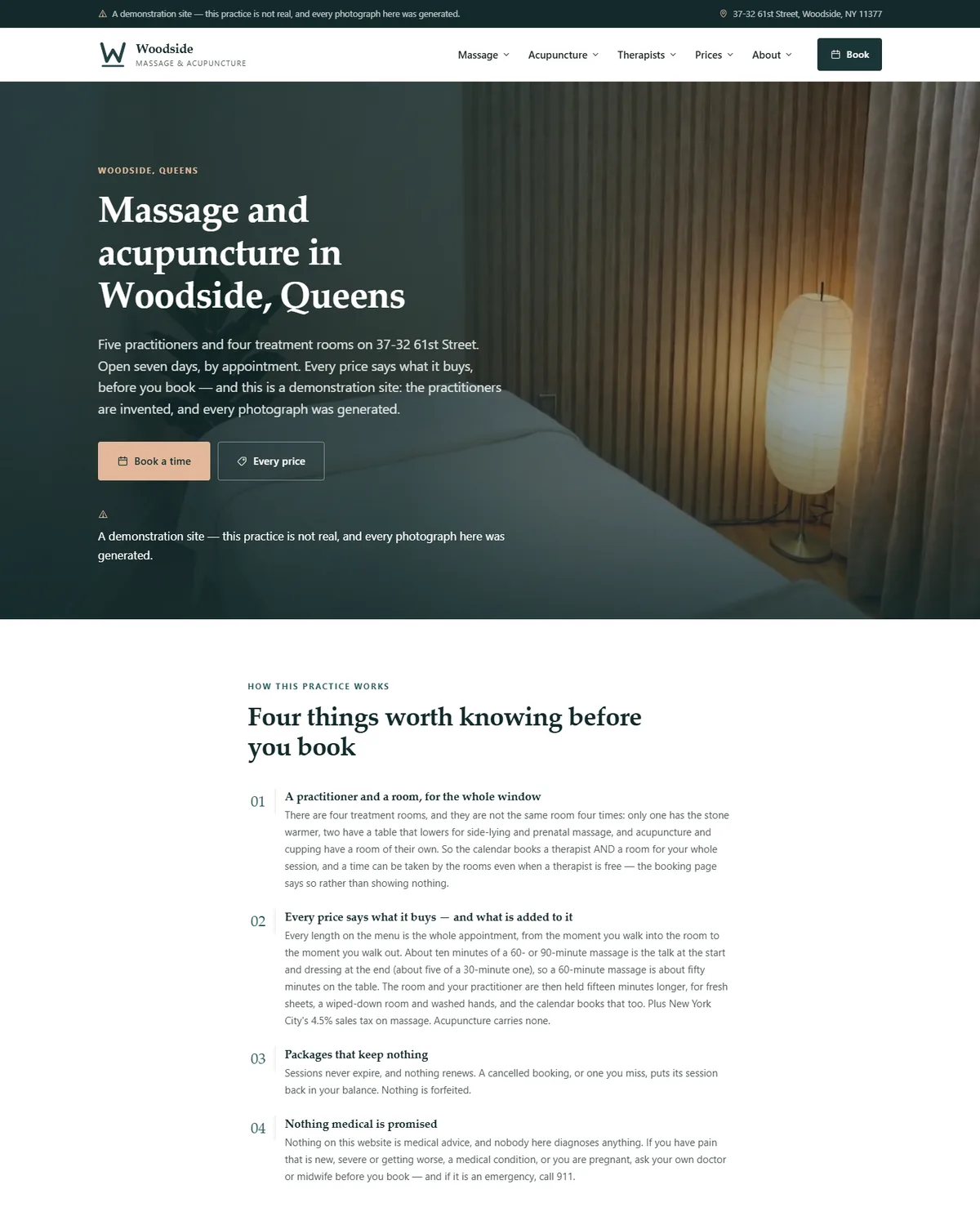
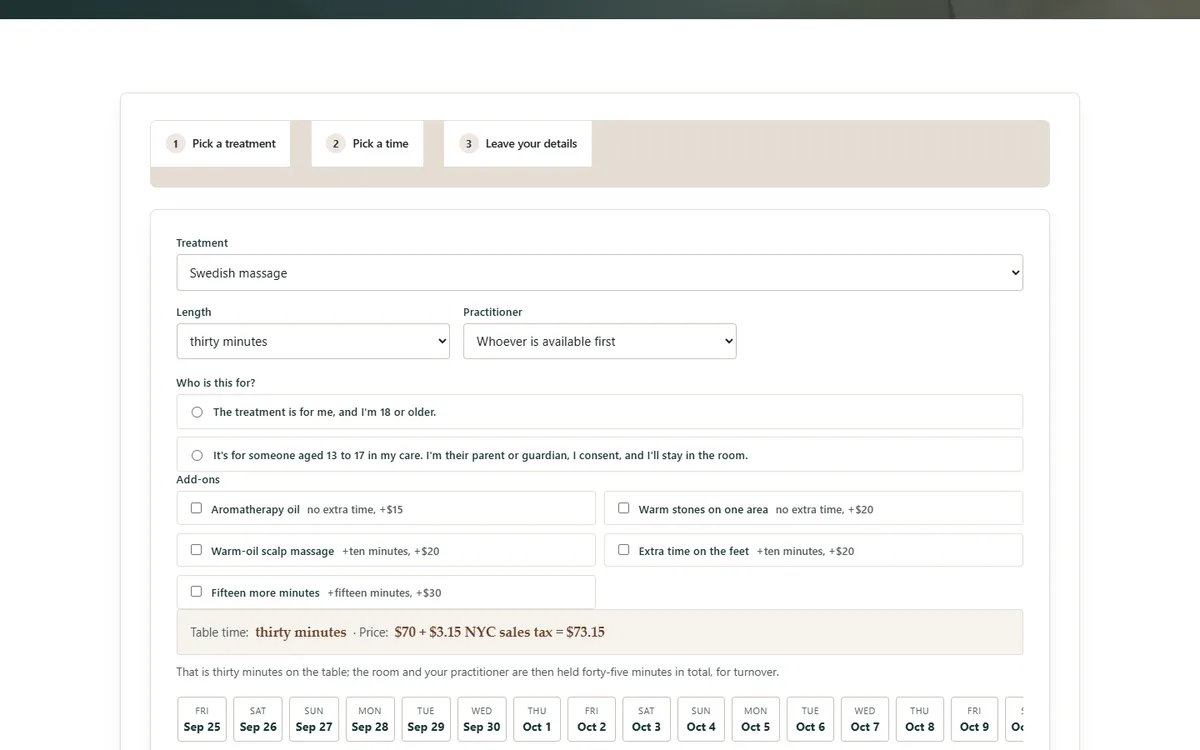
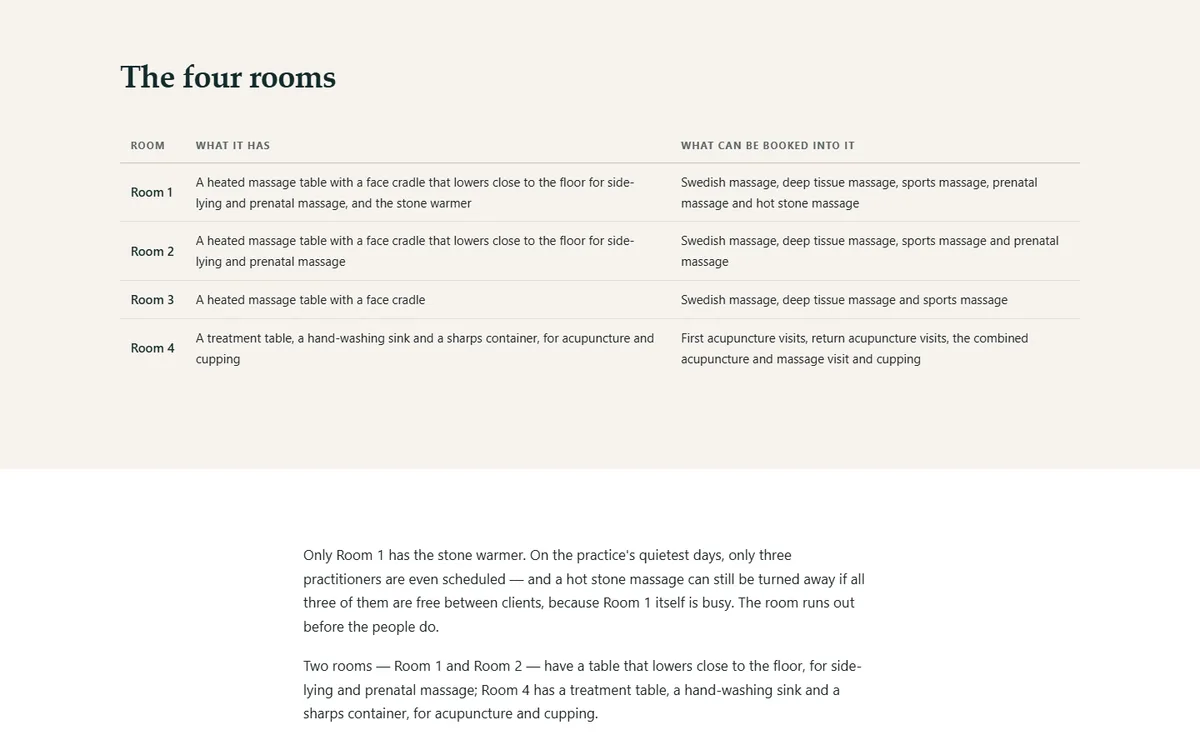
A massage practice's calendar has two things to fill, not one: the practitioner and the room. This design books both for the whole appointment. The rooms are not interchangeable — one has the stone warmer, two have a table that lowers for side-lying and prenatal massage, one is the acupuncture room — so the calendar puts each treatment in the plainest room that can take it and keeps the special rooms for what only they can do. When a hot stone massage cannot be booked because the stone room is taken, the booking page says the rooms are the reason, rather than simply showing nothing.
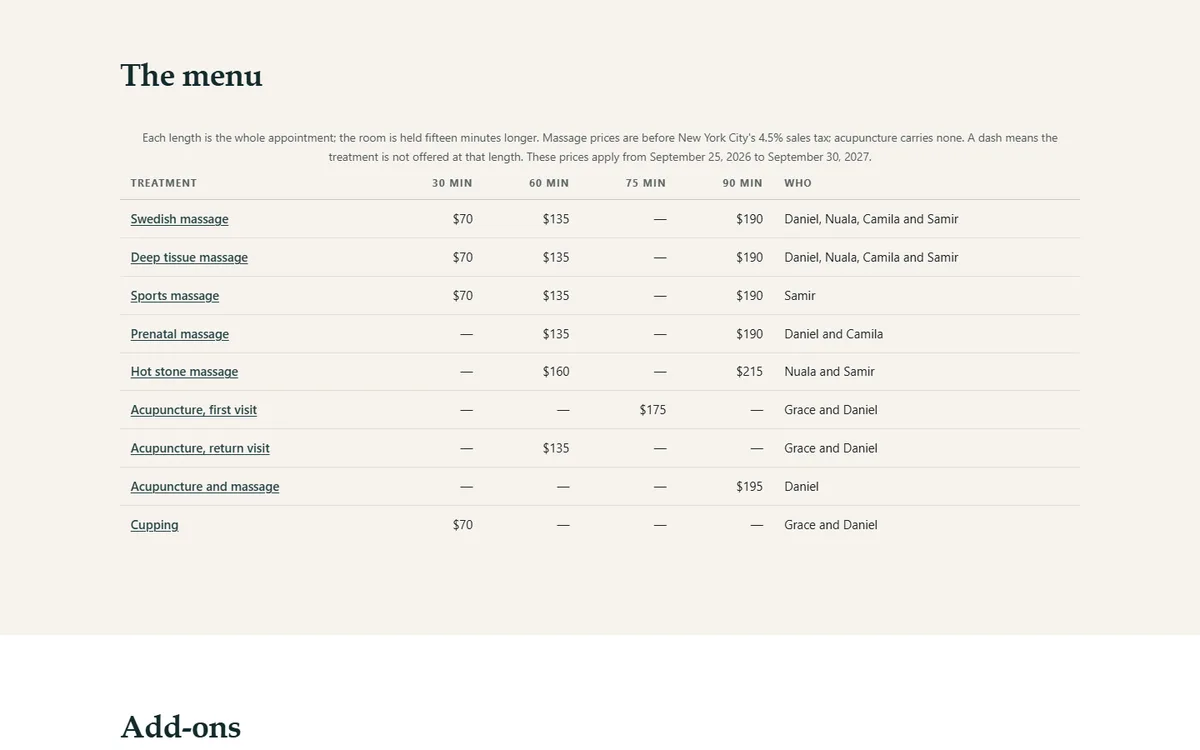
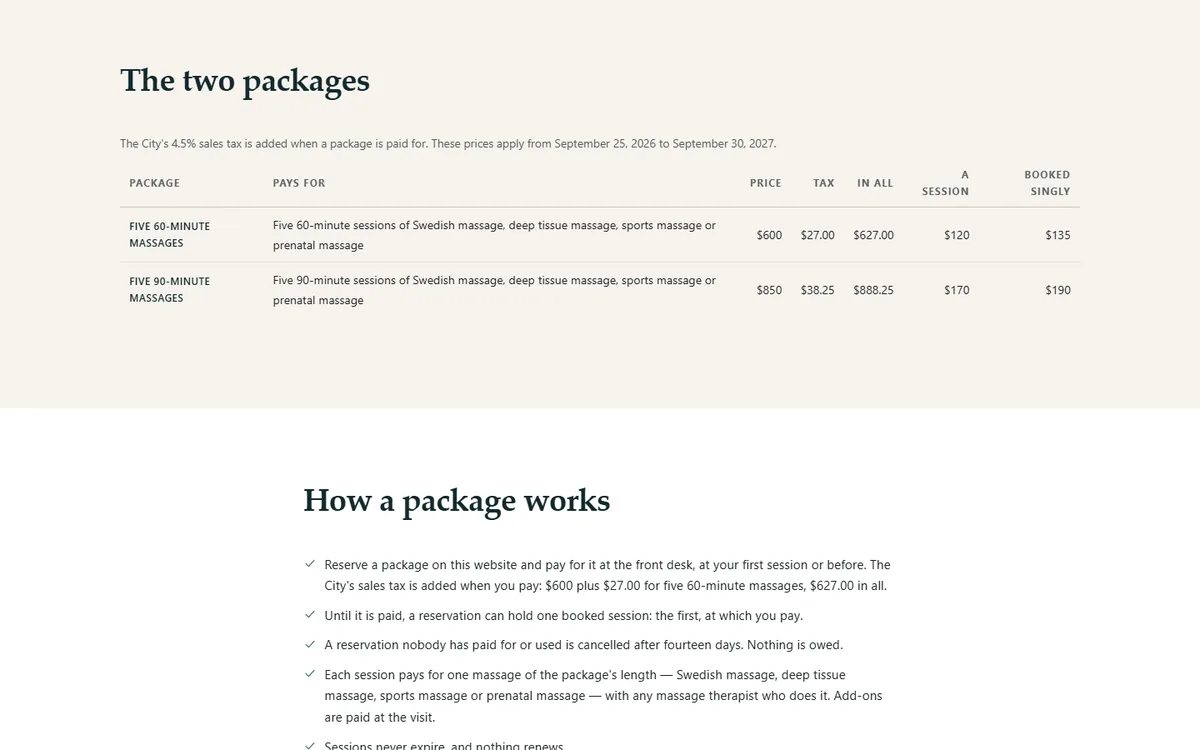
Every price says what it buys. Each length is the whole appointment, with the minutes on the table printed beside it, the fifteen minutes the room is held afterward for fresh sheets, and New York City's 4.5% sales tax on massage — which applies even when a licensed massage therapist gives it, and does not apply to acupuncture. Packages of five sessions are reserved online and paid at the desk; they never expire, a missed booking gives its session back, and unused sessions are refunded in full.
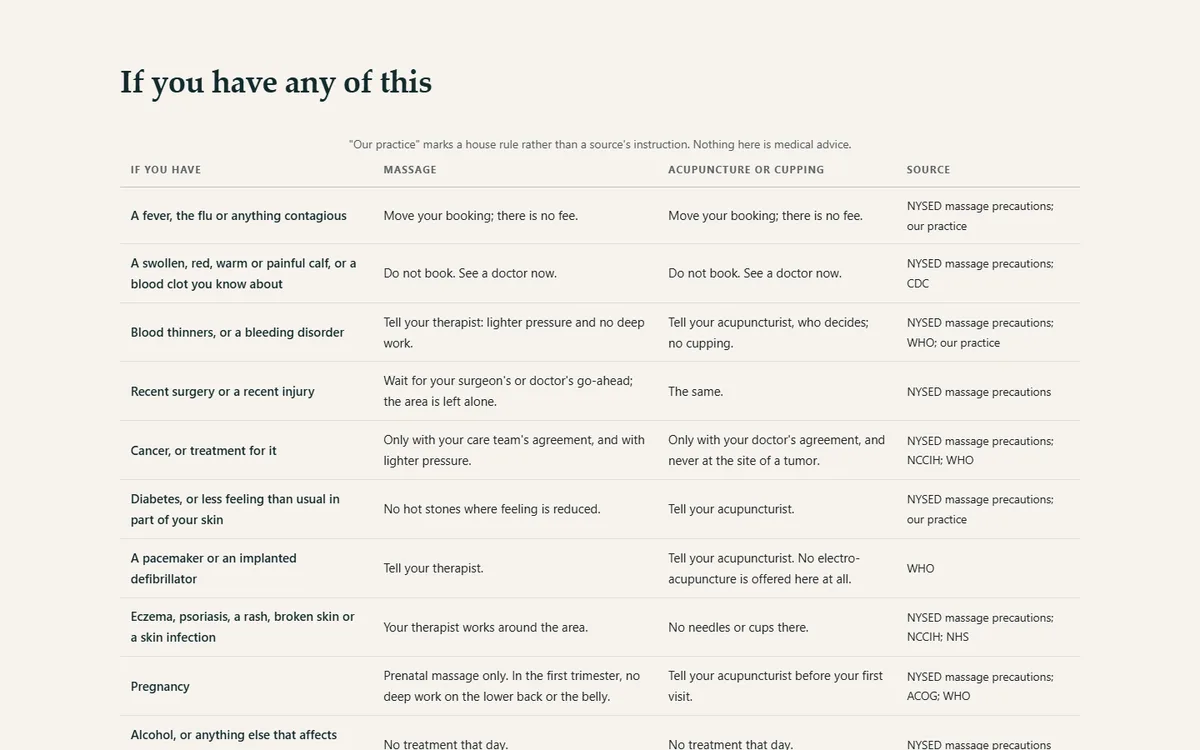
And nothing medical is promised. A page on when not to book, and when to see a doctor instead, with its sources; the physician advice New York requires at a first acupuncture visit; what the federal research says massage, acupuncture and cupping may and may not do, with the source beside every line. Twelve pages quote what massage and acupuncture businesses commonly advertise — 'board-certified acupuncturists', 'cures migraines, sciatica and infertility', 'a medical-grade day spa' — and answer each with the law and a source.