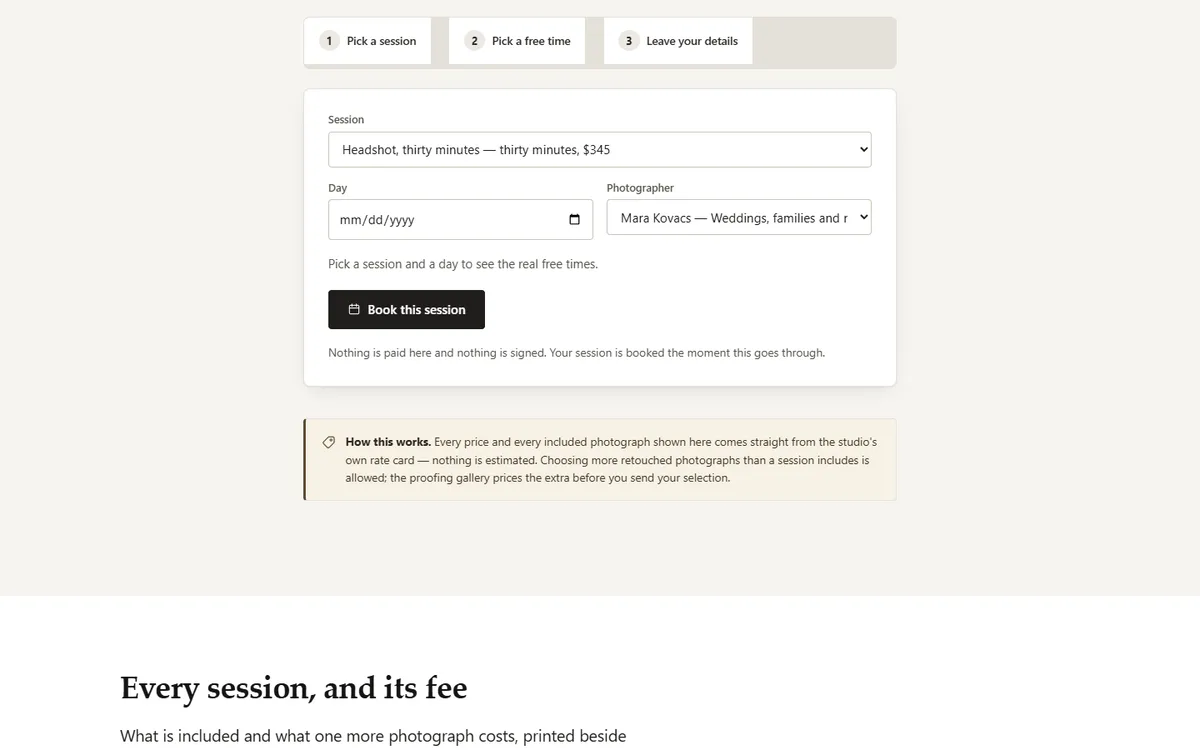
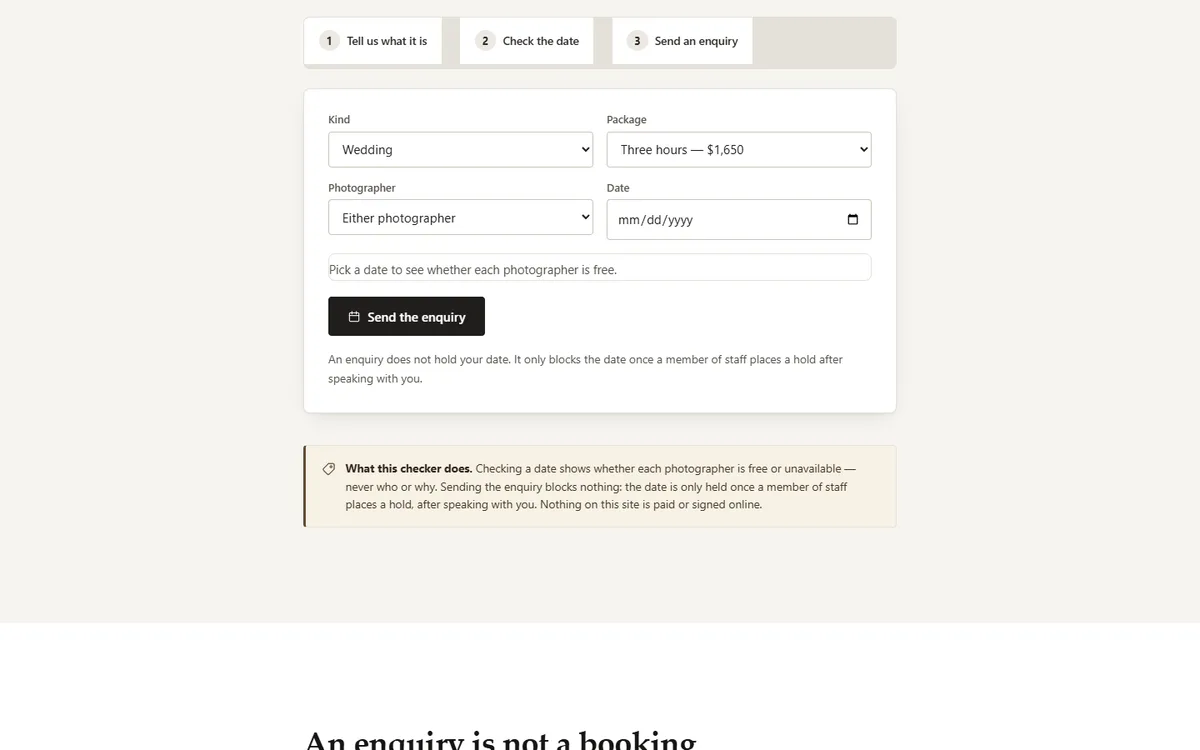
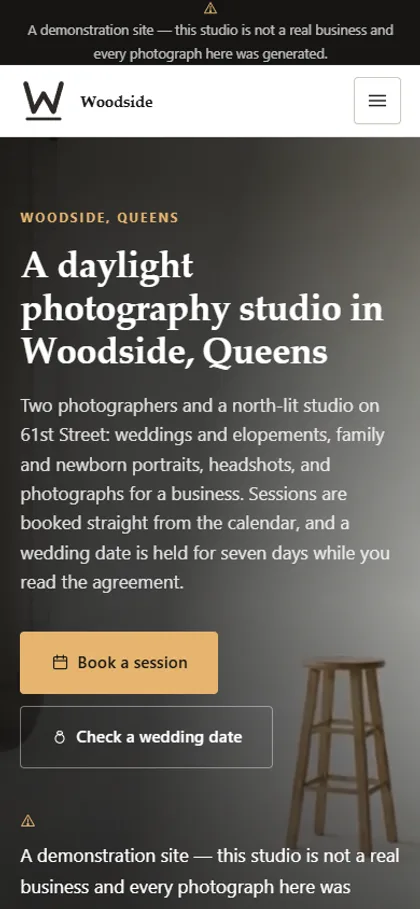
A photographer's website has one job most studios never let it do: take the booking. On this one a family session, a headshot or a newborn session is booked straight from the photographer's own calendar — the times offered are the times that photographer is genuinely free, and for a session in the studio, the times the room is free as well. A wedding is different, because it takes the photographer's whole day, so it is booked as a date: the couple checks it, the studio holds it for seven days while they read the agreement, and it becomes theirs when the agreement is signed. The two kinds of booking share one calendar, so a photographer holding a wedding date cannot be booked for a headshot that morning, and a photographer with a headshot booked cannot be held for a wedding that day — the other photographer still can.
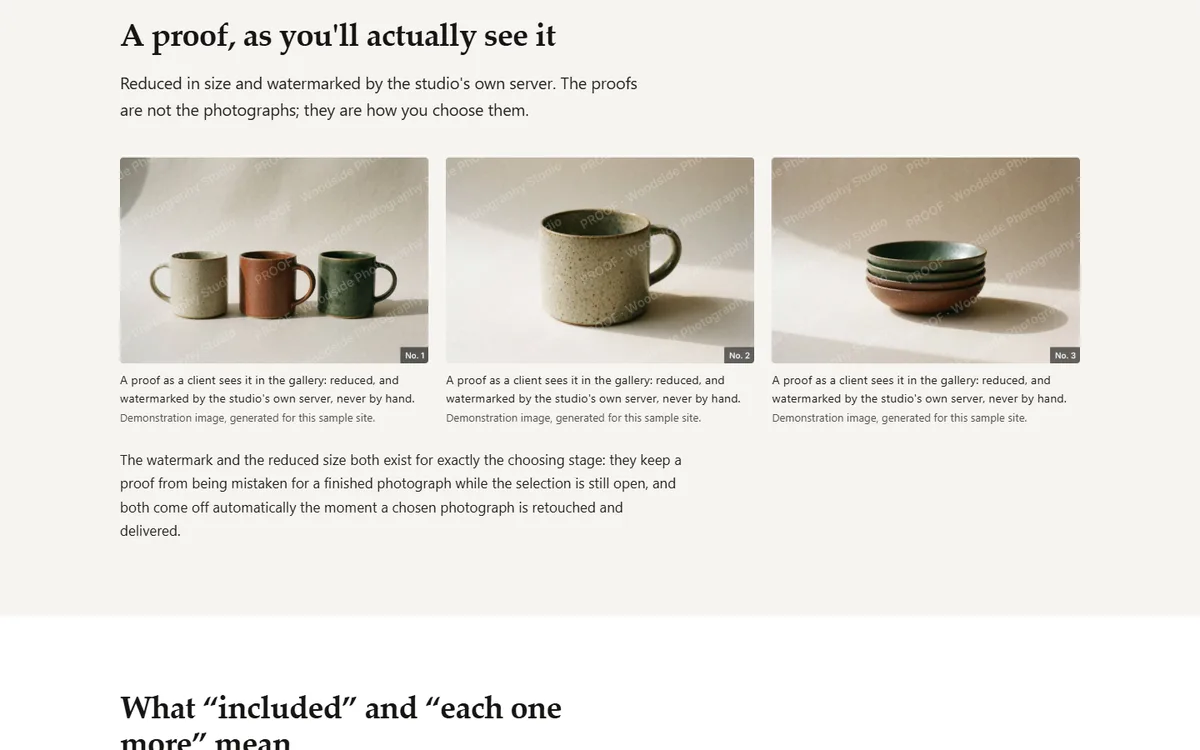
After the session comes the part clients remember: the proofs. The studio uploads the session to a private gallery reached by a signed link; the client sees watermarked, reduced copies, hearts the ones they want, watches a counter against the number included in their fee — with the price of each one more printed beside it — and submits the selection once. The gallery expires, and the proofs are then deleted from it, originals and all. The full-size files never pass through the gallery at all.
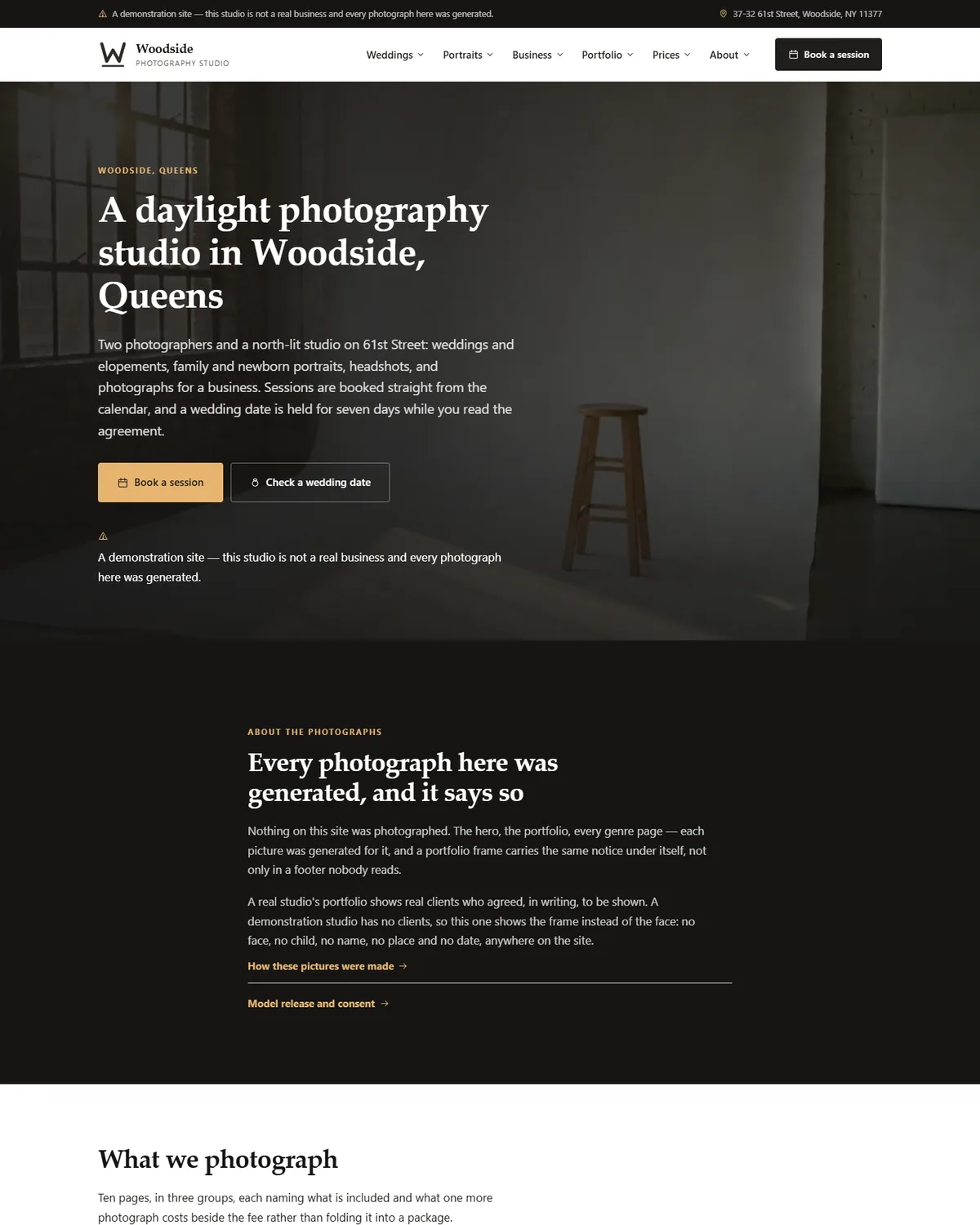
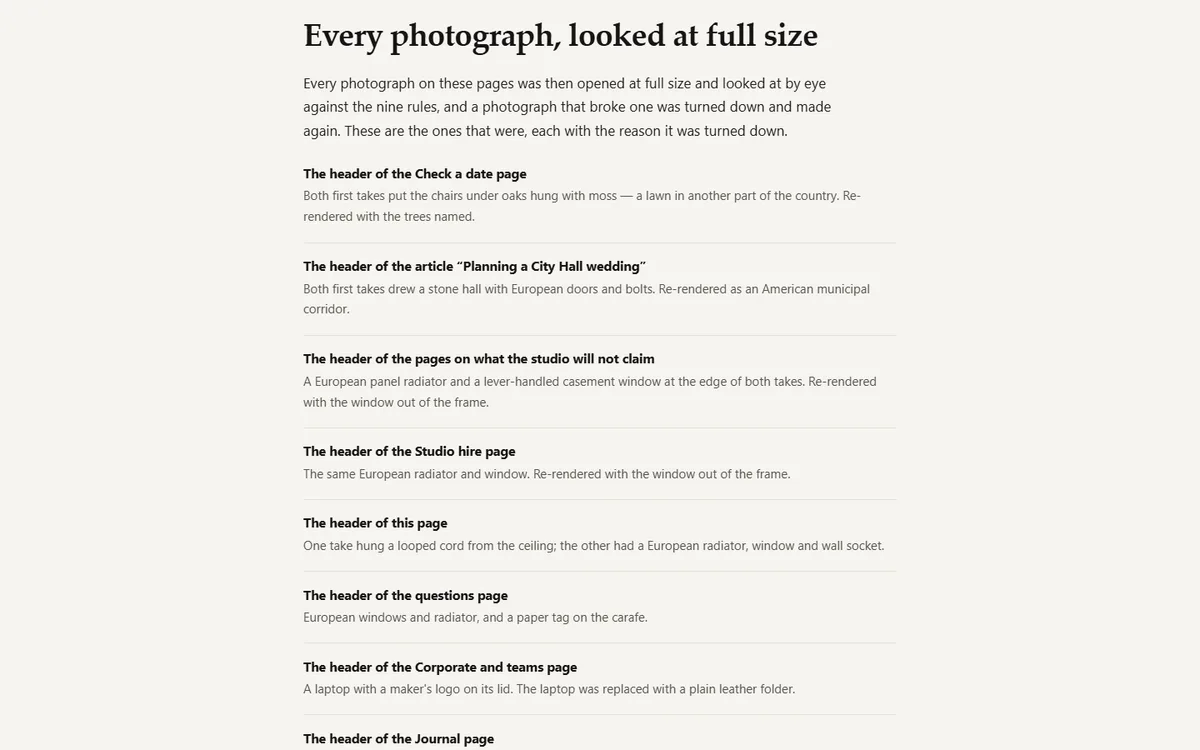
And every photograph on this demonstration is generated — which is the honesty problem a photographer's site has and no other trade does, because the pictures ARE the claim. Every portfolio frame carries a line saying so, no caption names a person, a place or a date, no picture shows a face or a child, and every image of a person carries the label New York now requires on a computer-generated person in an advertisement. The build refuses to ship a picture nobody has looked at full size.